
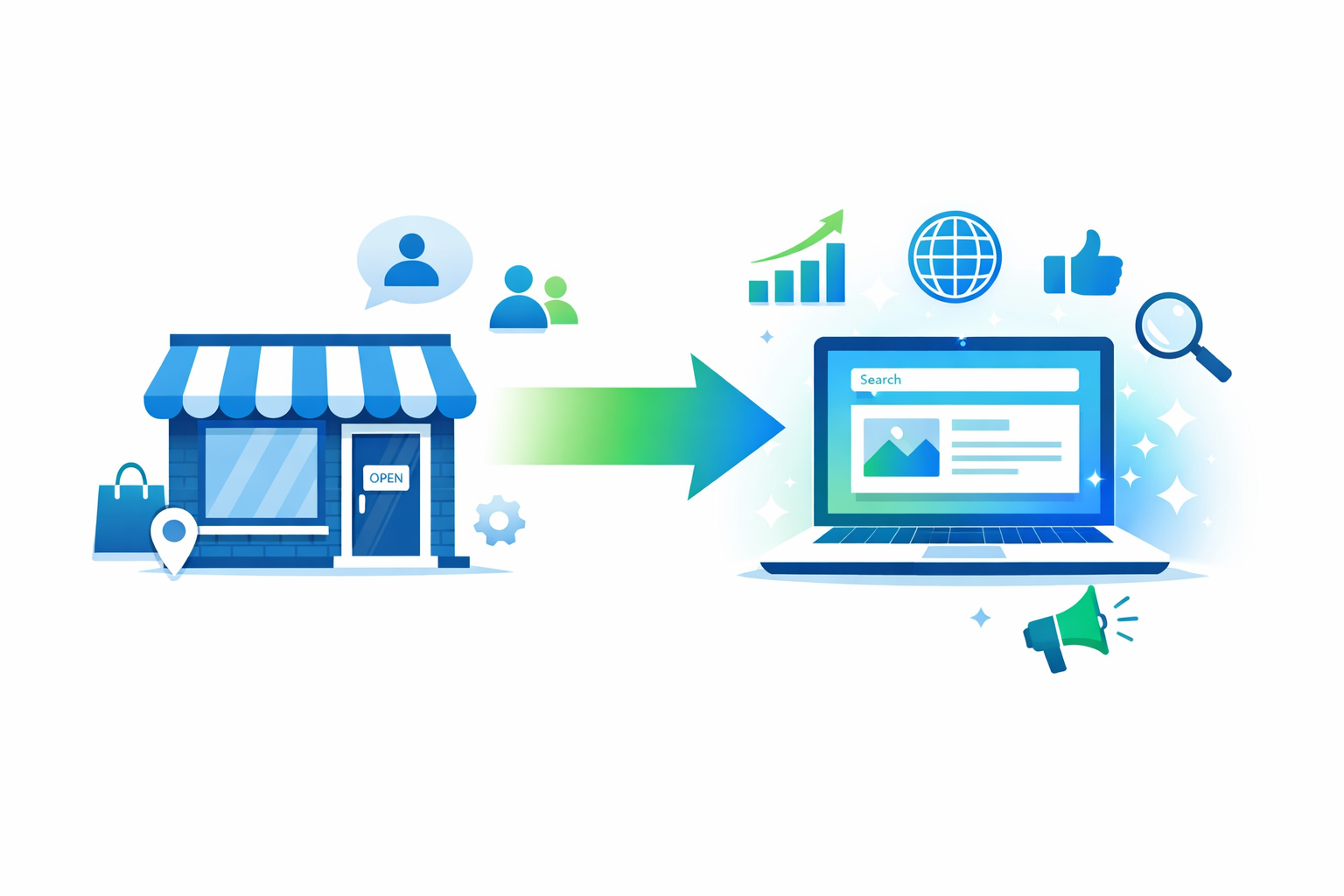
Running a small business without a website in 2026 is like running a shop with the shutters half closed. Sure, some customers might still find you, but you're making it unnecessarily hard for them.
Think about how you search for services yourself. Need a plumber? You Google it. Looking for a new restaurant? You check online reviews and menus. Want to buy a gift? You compare options online first. Your customers do the exact same thing when they're looking for what you sell.
A website isn't just a digital brochure anymore. It's your 24/7 salesperson, your credibility proof, and often the first impression customers have of your business. Let's break down exactly why this matters and what you're missing without one.
Your Customers Are Already Looking Online
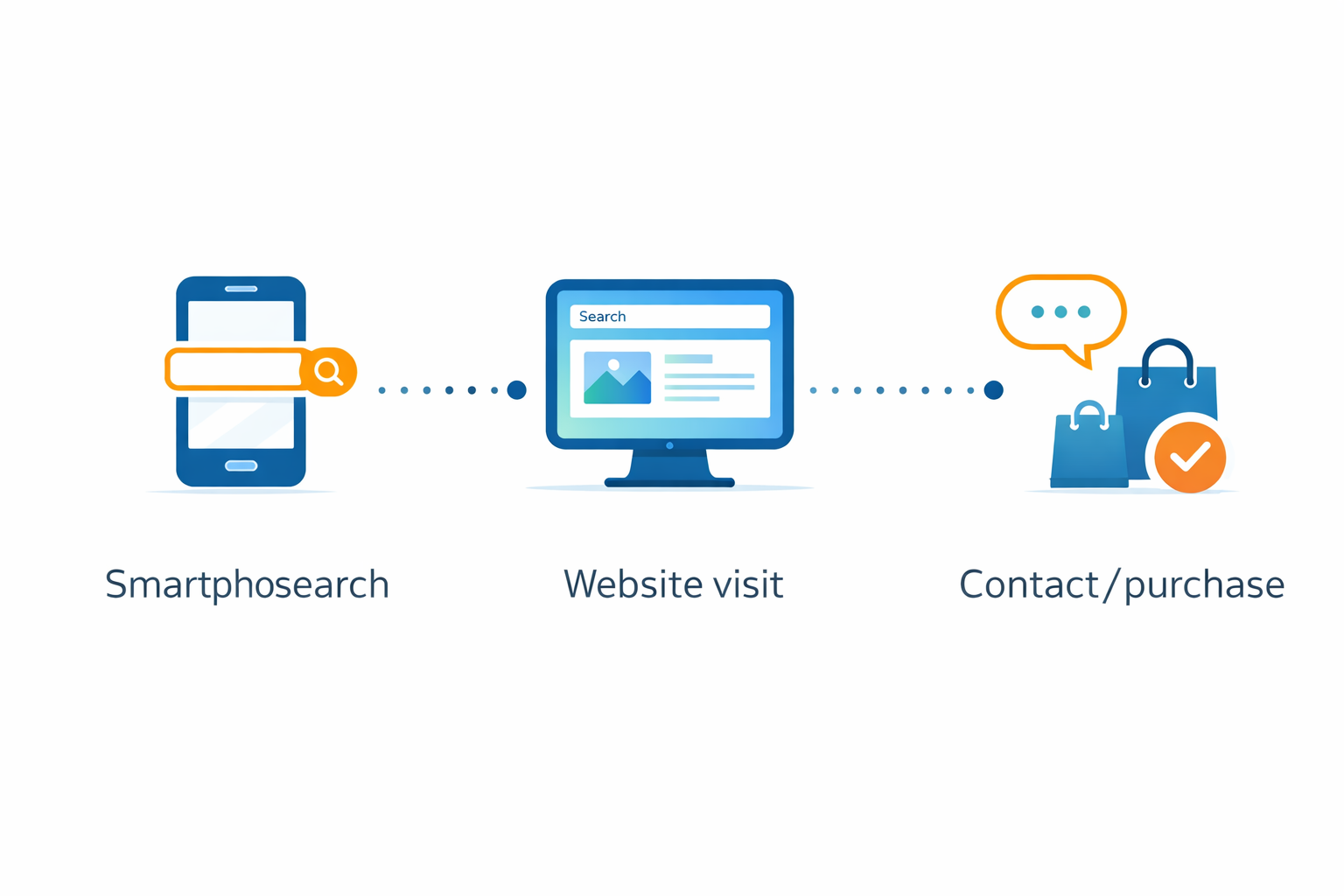
Here's a reality check: over 80% of consumers research businesses online before making a purchase or visiting a store. Even if your business is purely local—a bakery, a salon, a repair shop—people check online first.
When potential customers search and can't find you, one of two things happens:
- They assume you're not professional enough to have a website
- They find your competitor instead
Neither outcome helps your business grow. The frustrating part? These are people who were already interested in what you offer. They were ready to buy. You just weren't there to catch them.
The local search reality:
- "Near me" searches have grown consistently year over year
- 76% of people who search for something local visit a business within 24 hours
- 28% of those searches result in a purchase
Without a website, you're invisible in these searches. Even a simple one-page website with your services, location, and contact information puts you on the map—literally.
Credibility Isn't Optional Anymore
Would you trust a business that doesn't have a website? Most people wouldn't, and it's not because they're being unfair. A website signals legitimacy.
When someone lands on your professional website, they see:
✅ You're an established business, not a fly-by-night operation
✅ You care enough about your customers to give them information
✅ You're confident in your services and willing to be found
✅ You've invested in your business's future
Compare that to finding a Facebook page that hasn't been updated in six months or just a phone number on a directory listing. The professional website wins every time.
This matters even more for service-based businesses. If you're asking someone to let you into their home for repairs, trust you with their finances, or handle their health, they want reassurance. Your website provides that before they ever pick up the phone.
People judge businesses the same way they judge people—by first impressions. Your website is that first impression.
Your Shop Never Closes
A physical store has hours. You close for lunch, evenings, weekends, holidays. But your website? It works while you sleep.
Someone at midnight wondering about your pricing? Your website answers them. A customer on Sunday wanting to book an appointment for Monday? Your website handles it. A potential client in a different timezone? Your website bridges the gap.
This 24/7 availability does several things for your business:
It captures leads you'd otherwise miss. That person researching at 11 PM isn't going to wait until you open at 9 AM. They'll find someone else whose website gave them what they needed.
It reduces repetitive questions. How many times do you answer "What are your hours?" or "Do you offer this service?" Your website answers these automatically, freeing you to focus on actual work.
It lets customers help themselves. Many people prefer finding information on their own rather than calling. Give them that option, and they'll appreciate it.
Marketing Gets Easier (and Cheaper)
Traditional advertising is expensive. Print ads, billboards, flyers—they cost money every single time, and once they're gone, they're gone. A website changes this equation entirely.
Your website is a marketing asset that keeps working. Write a helpful blog post once, and it can bring in customers for years. Create a page explaining your services, and it answers questions indefinitely. The upfront investment keeps paying dividends.
Consider the cost comparison:
| Marketing Method | Ongoing Cost | Reach | Longevity |
|---|---|---|---|
| Print Flyers | High (per batch) | Local | Days/weeks |
| Newspaper Ads | Very High | Local/Regional | One day |
| Website | Low (hosting) | Global | Indefinite |
| Social Media | Time-intensive | Algorithm-dependent | Fleeting |
Your website also works with other marketing efforts. Running a social media campaign? Link to your website for full details. Sending emails? Direct people to your website to learn more. Printed a flyer? Include your website for people who want more information.
Everything points back to your website because it's the only space you fully control online. Social media platforms change algorithms, limit your reach, and could theoretically shut down. Your website is yours.
Compete with Bigger Players
Here's something encouraging: on the internet, size matters less than you'd think. A well-designed website for your two-person operation can look just as professional as a corporate giant's.
Customers often prefer smaller businesses for the personal touch, the local presence, the authentic feel. Your website lets you communicate those advantages while still appearing professional and capable.
Small business advantages your website can highlight:
- Personal attention and direct communication with owners
- Flexibility and customization larger companies can't offer
- Local presence and community involvement
- Faster decision-making and responsiveness
- Real relationships, not automated systems
The businesses that understand this use their websites to emphasize what makes them different, not to pretend they're something they're not. Authenticity wins online.
Building Real Relationships with Customers
A website isn't just about getting new customers—it's about keeping existing ones engaged. Through simple features, you can turn one-time buyers into repeat customers.
Email newsletters keep your business in their minds without being intrusive. Share updates, tips, or special offers directly to people who've asked to hear from you.
Customer testimonials and reviews displayed on your site show new visitors that real people trust you. Nothing builds confidence like seeing others' positive experiences.
Contact forms and chat options make it easy for customers to reach out with questions, feedback, or booking requests. The easier you make communication, the more it happens.
Update sections or blogs show you're active and engaged. A website that looks abandoned makes people wonder if the business is still running.
These features don't need to be complicated. Even simple implementations make a significant difference in how customers perceive and interact with your business.
What Kind of Website Do You Actually Need?
Not every small business needs a complex website with hundreds of pages. In fact, most don't. A simple, well-designed website often works better than an overcomplicated one.
For service businesses (plumbers, salons, consultants):
- Clear description of what you offer
- Service areas or locations
- Contact information prominently displayed
- Customer testimonials
- Easy way to request a quote or book
For retail businesses:
- Product information or catalog
- Store location and hours
- Contact details
- Possibly e-commerce if you want to sell online
For restaurants and cafes:
- Menu (always up to date!)
- Location and hours
- Reservation option
- Contact information
The key is making information easy to find and actions easy to take. Visitors shouldn't have to hunt for your phone number or wonder what you actually do.
Getting Started Doesn't Have to Be Hard
Many business owners avoid getting a website because it seems technically complicated or expensive. The reality in 2026 is different.
Options range from very simple to fully custom:
You could use a website builder and create something basic yourself in a weekend. For many businesses, this works fine.
Or you could work with professionals who understand your business goals and create something tailored to your needs. This costs more upfront but often performs better because everything is designed with your specific customers in mind.
At Duo Dev Technologies, we specialize in creating websites for small businesses that don't just look good—they work. We understand budget constraints, technical concerns, and the need for a website that's easy to update without calling a developer every time.
If you're unsure where to start, we're happy to have a conversation about what would work best for your situation. No pressure, no jargon—just honest advice about your options.
The Real Cost of Waiting
Every day without a website is a day where:
- Potential customers can't find you
- You look less professional than competitors who do have websites
- You're missing opportunities that won't come back
- You're working harder to be visible when a website could do that work
The businesses that thrive aren't the ones who waited until they felt "ready." They're the ones who started, learned, and improved over time.
Your website doesn't need to be perfect on day one. It needs to exist. You can add features, improve design, and expand content as your business grows. But you can't improve what doesn't exist.
Taking the First Step
If you've read this far, you're probably already convinced you need a website—or at least seriously considering it. Here's what we'd suggest:
-
List what your customers need to know. Services, location, hours, contact info—the basics.
-
Look at competitors' websites. Not to copy, but to understand what customers in your industry expect.
-
Decide on your priority. Do you want people to call you, book online, or visit your store? Design around that goal.
-
Set a realistic budget. Websites range from nearly free to tens of thousands. Know what you can invest.
-
Talk to professionals if needed. A consultation can clarify options you might not know about.
Your business has already taken the hardest step—it exists, it serves customers, it provides value. A website simply makes that visible to everyone looking for exactly what you offer.
The question isn't whether you can afford a website. It's whether you can afford to be invisible in a world where everyone searches online first.
Ready to get your business online? Contact us for a free consultation about your website needs.