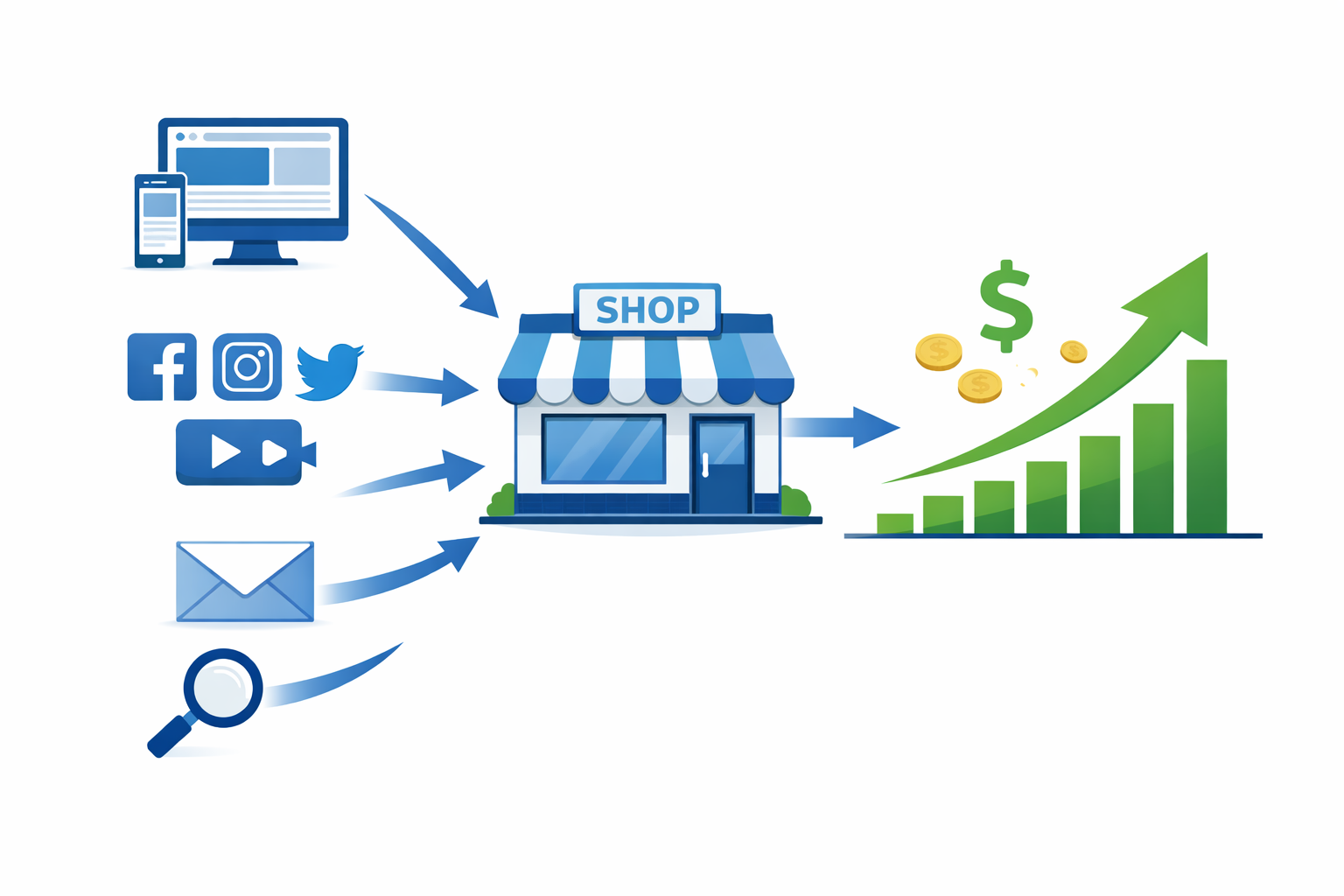
Every business owner hears they need to "be online." But the connection between having a website or social media accounts and actually making more money isn't always obvious. What specifically about digital presence leads to increased revenue?
It's not magic, and it's not automatic. Simply existing online doesn't guarantee anything. But strategic digital presence creates opportunities and advantages that directly translate to sales—when done right.
Let's break down the concrete ways being online actually impacts your bottom line.
You Become Findable When Customers Are Ready to Buy
The buying process has fundamentally changed. Before the internet, customers discovered businesses through limited channels: driving by, word of mouth, Yellow Pages, local advertising. Your geographic location and advertising budget determined who found you.
Now, customers search online when they have a need. That moment of active searching represents high-intent interest. Someone Googling "emergency plumber near me" isn't casually browsing—they have a problem and want a solution now.
Without digital presence: You're invisible during these high-intent moments. The customer calls your competitor instead because they showed up in search results.
With digital presence: Your business appears when people are actively looking for what you sell. You intercept customers at the exact moment they're ready to buy.
This applies to virtually every business:
- Local services (plumbers, restaurants, salons)
- B2B services (accountants, consultants, agencies)
- E-commerce (any product with online shoppers)
- Professional services (lawyers, doctors, trainers)
The businesses winning aren't necessarily better at their craft—they're better at being found. Digital presence ensures you're in the consideration set when purchase decisions happen.
Credibility Before First Contact
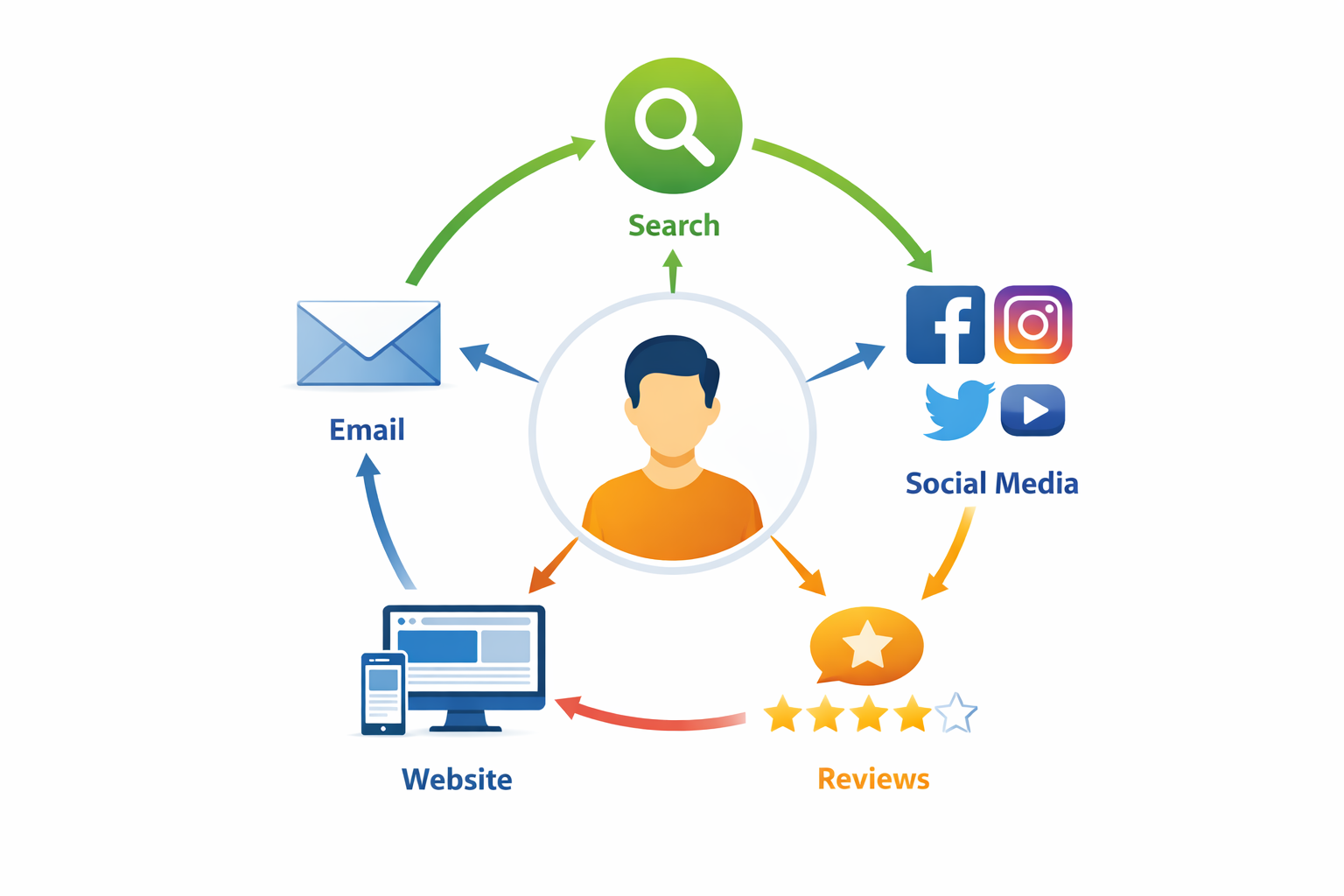
Prospects research before they reach out. They check your website, read reviews, browse social media, and form impressions before ever speaking to you. This happens whether you want it to or not.
Without professional digital presence: Customers find nothing, or they find weak signals (outdated website, empty social profiles, no reviews). They assume you're not established, not professional, or not trustworthy. They move on to competitors who look more credible.
With strong digital presence: Customers find a professional website, positive reviews, active social presence, and clear information. They trust you before first contact. The sales conversation starts from a position of credibility rather than skepticism.
This pre-contact impression-forming affects:
Price sensitivity. Customers pay more to businesses that seem established and trustworthy. Unknown quantities get pushed on price.
Objection levels. Prospects who've done research come with fewer concerns. They've already answered their basic questions online.
Close rates. Trust is built before the conversation. Sales cycles shorten when credibility isn't in question.
Professional digital presence functions like a 24/7 reference check that customers perform before deciding whether to engage.
Expanded Reach Beyond Geography
Physical businesses are limited by geography. A restaurant in Chennai serves Chennai customers. A consultant in Mumbai meets Mumbai clients. Foot traffic depends on location.
Digital presence dissolves these boundaries.
E-commerce lets you sell products nationally or internationally. A specialty shop in a small town can reach customers across India who search for that specific product.
Service businesses can serve clients anywhere appropriate for their service. Consultants, designers, developers, coaches—anyone whose work doesn't require physical presence can operate nationally or globally.
Local businesses expand their effective catchment area. Instead of reaching only people driving by, you reach everyone in the city searching for your service.
This expanded reach multiplies your potential customer base. Instead of competing for the limited number of people who happen to pass your location, you compete for anyone searching for your category within your serviceable area.
More potential customers means more opportunities. More opportunities means more sales—assuming your conversion processes work.
Always-On Selling
Your physical presence has limits. You sleep. Your shop closes. Your staff goes home. But customers' needs don't follow your business hours.
Digital presence works around the clock:
Someone at 11 PM looking for a weekend restaurant—your website with menu, photos, and reservation option captures them.
A business owner on Sunday researching software vendors—your product pages and case studies inform them.
A night-shift worker during break shopping for a gift—your e-commerce store takes their order.
This isn't just convenience for customers. It directly impacts sales:
- Customers who can't get information when they want it often go elsewhere
- Late-night browsing frequently converts to next-day purchases
- International customers in different time zones become reachable
Your digital presence essentially creates a tireless employee who never sleeps, never calls in sick, and handles unlimited simultaneous inquiries.
Lower Customer Acquisition Costs
Traditional customer acquisition is expensive. Print advertising, direct mail, trade shows, cold calling—these methods have high costs per reached customer and often low conversion rates.
Digital marketing offers more efficient alternatives:
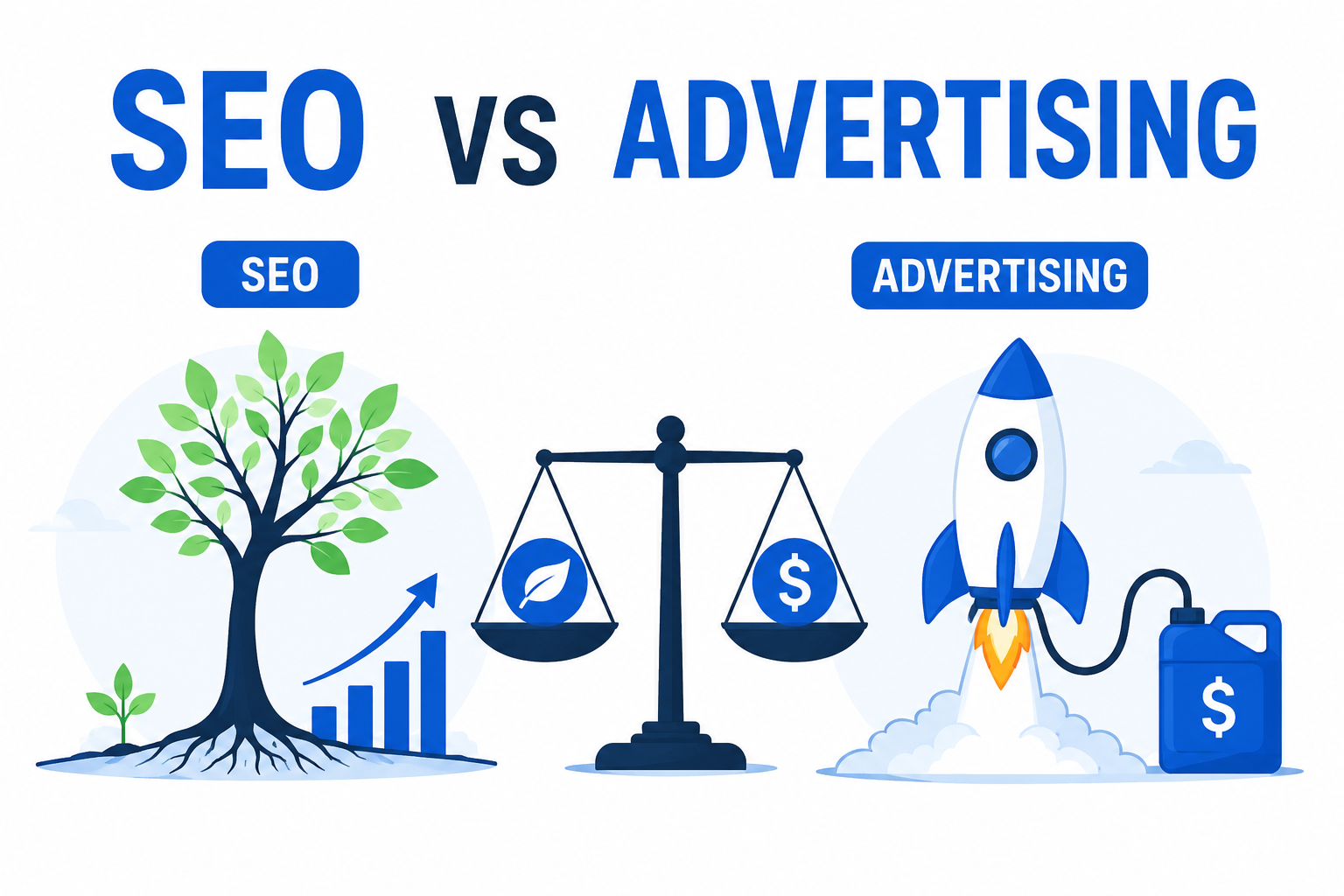
Organic search brings customers who are already looking for you. No payment per click—just the investment in creating findable content.
Content marketing attracts and educates customers over time. A helpful blog post written once continues attracting potential customers for years.
Email marketing reaches previous customers and interested prospects at essentially zero marginal cost per message.
Social media (organic) builds audience and awareness without direct advertising spend.
Even paid digital advertising typically offers:
- More precise targeting than traditional media
- Clear measurement of returns
- Smaller minimum budgets
- Faster testing and optimization
The result: more customers reached for less money spent. Those efficiency gains directly improve profitability on each sale.
Data-Driven Improvement
Physical business often operates on intuition. You think you know who your customers are, what they want, why they buy. But you're often guessing.
Digital presence generates data:
Website analytics show:
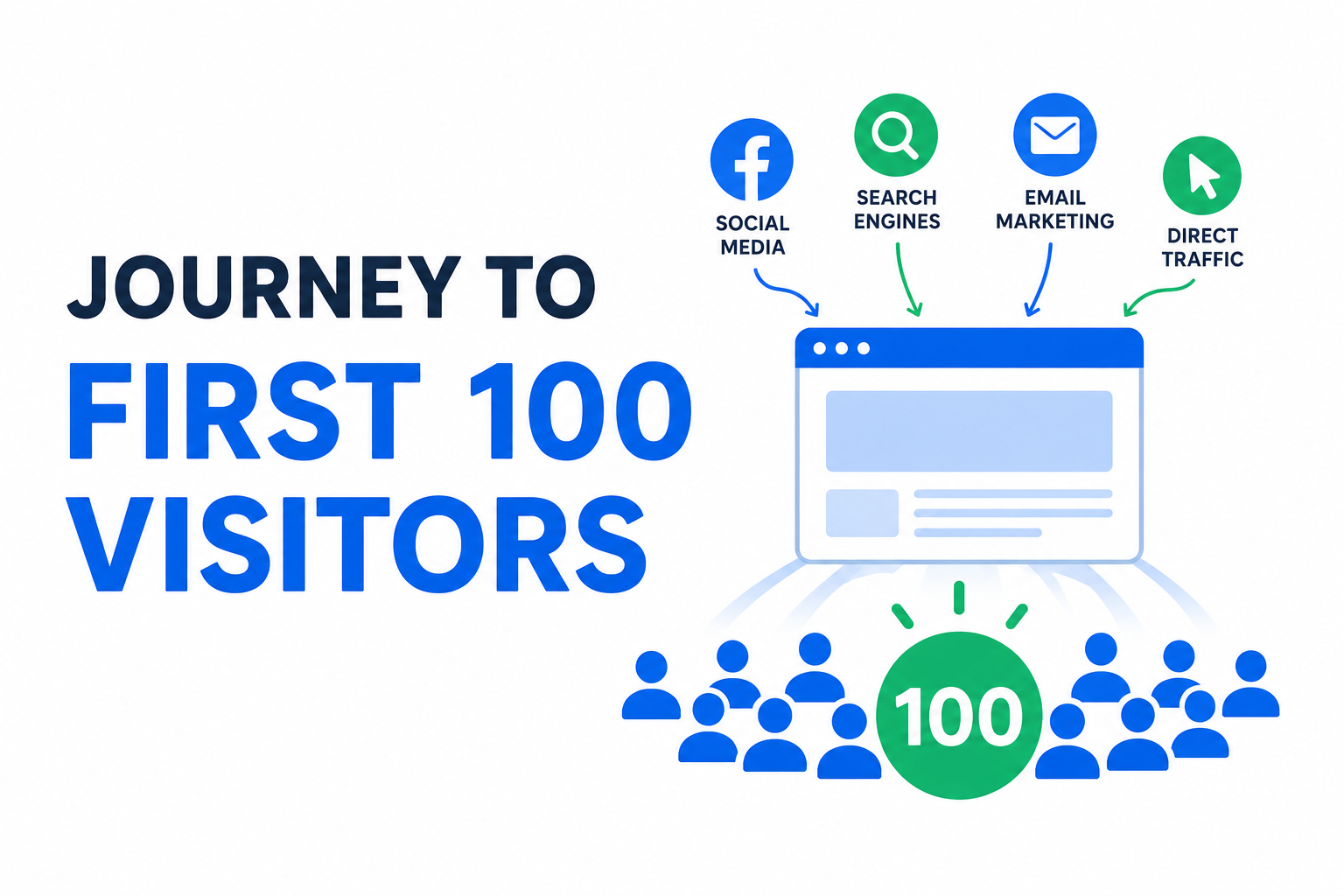
- Where visitors come from
- What pages they view
- Where they drop off
- What converts them to inquiries
Advertising platforms reveal:
- Which messages resonate
- Which audiences respond
- What drives action
- Cost per acquisition by channel
Customer interactions indicate:
- Common questions and concerns
- Friction points in buying process
- What information people seek
- How different segments behave
This data allows continuous improvement. You stop investing in what doesn't work. You double down on what does. Over time, your marketing becomes increasingly efficient—more results from less spend.
Businesses without digital presence make decisions blind. Those with it can see what's working and why.
Building Relationships at Scale
Traditional relationship building is one-on-one. You meet a customer, have a conversation, follow up personally. This works but doesn't scale—there are only so many hours in a day.
Digital channels let you maintain relationships at scale:
Email newsletters keep you top-of-mind with thousands of contacts simultaneously. When they need what you sell, they remember you.
Social media content provides value to followers regularly, building affinity without individual effort per person.
Retargeting advertising re-engages website visitors who didn't convert, giving you multiple chances to win their business.
Automated sequences nurture leads over time, providing relevant information until they're ready to buy.
These aren't replacements for human connection—but they extend your relationship capacity far beyond what's possible through personal interaction alone.
Converting Attention to Action
Having digital presence isn't enough. The presence needs to convert attention into business outcomes.
Key conversion elements:
Clear calls to action. Visitors should know what you want them to do: call, buy, book, request a quote.
Friction reduction. Every obstacle in the buying process costs customers. Simplify forms, streamline checkout, make contact easy.
Trust signals. Reviews, testimonials, certifications, secure payment badges—these reassure hesitant buyers.
Mobile optimization. Most traffic is mobile. Poor mobile experience loses the majority of your potential customers.
Speed. Slow-loading pages lose visitors. Every second of delay reduces conversions.
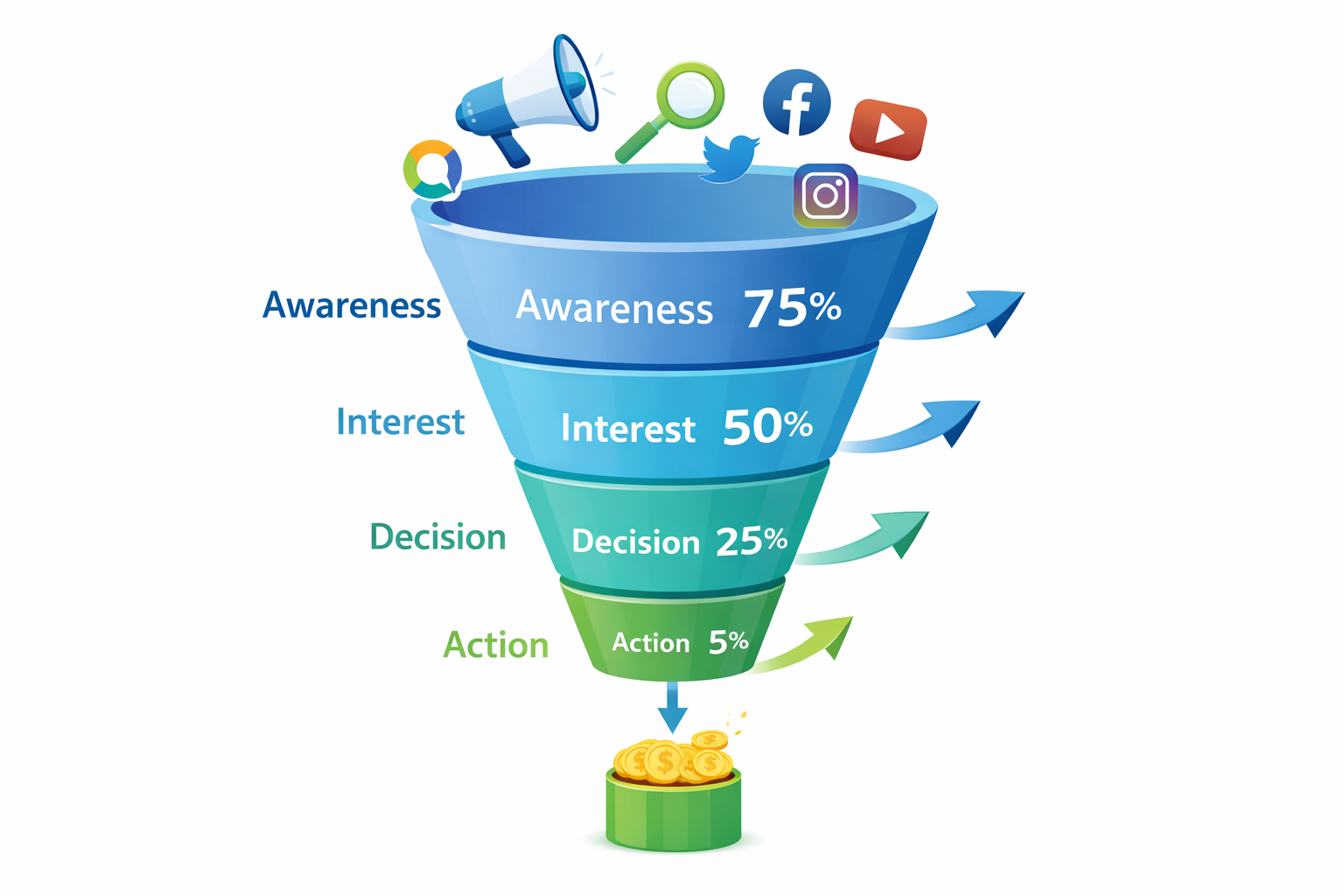
Your digital presence is a funnel. Traffic enters the top, buyers emerge from the bottom. Optimizing each stage increases what comes out the end.
Practical Starting Points
If you're not online or not seeing results from your current presence:
Start with a professional website. This is your digital headquarters. Everything else links back to it. Even a simple site that clearly explains what you do, for whom, and how to contact you is better than nothing. We've written about why this matters.
Claim your Google Business Profile. For local businesses, this is essential. It puts you on Google Maps and local search results. Free and high-impact.
Generate reviews. Ask satisfied customers to leave Google reviews. Social proof heavily influences purchase decisions.
Create useful content. Answer questions your customers ask. Each piece of content is an entry point where potential customers can discover you.
Track what happens. Install Google Analytics. Know where visitors come from and what they do. Decisions based on data beat decisions based on guesses.
The Compounding Effect
Digital presence benefits compound over time:
- Content you create continues attracting visitors
- Reviews accumulate, building more social proof
- Email lists grow, expanding direct reach
- SEO authority develops, improving search visibility
- Brand recognition increases, reducing customer acquisition friction
Businesses that invest early in digital presence gain advantages that competitors starting later can't quickly replicate. The gap widens over time.
This doesn't mean it's too late to start—but it does mean starting sooner is better than starting later.
Ready to build your digital presence? Duo Dev Technologies helps businesses create websites and digital strategies that actually drive sales. Let's talk about your goals.