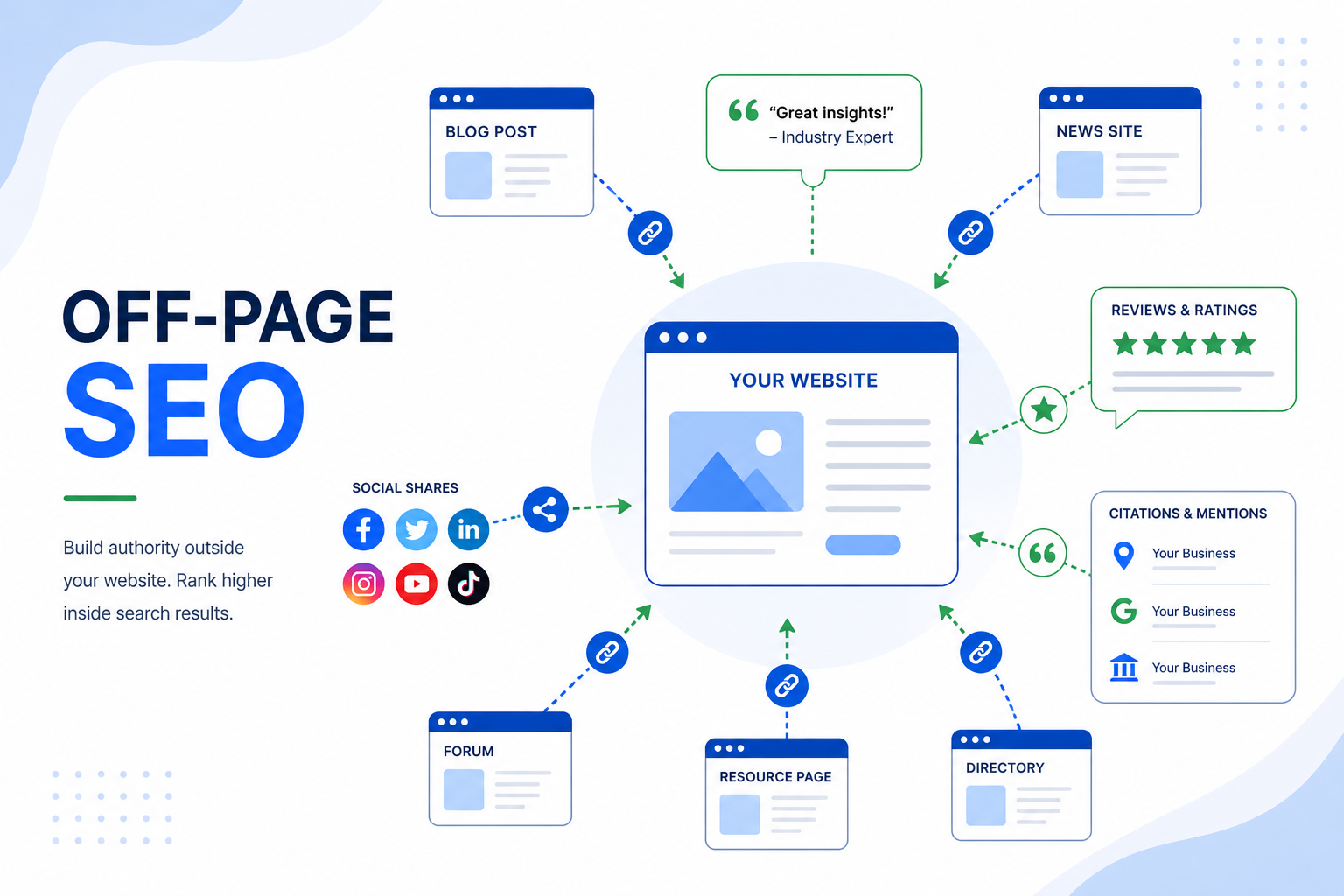
On-page SEO gets your website technically sound. Off-page SEO builds your website's reputation across the internet. Both matter, but off-page is where most websites fail to compete.
Google's algorithm considers hundreds of signals from outside your website. Links from other sites. Brand mentions. Social engagement. Reviews. These external signals tell search engines whether your site deserves to rank.
This checklist covers what actually works for off-page SEO in 2026. No black-hat tricks. No shortcuts that'll get you penalized. Just proven strategies.
Link Building Fundamentals
Backlinks remain the backbone of off-page SEO. But not all links are created equal.
Quality Over Quantity
One link from an authoritative, relevant website beats a hundred links from random directories. Google's algorithm has gotten remarkably good at identifying and devaluing low-quality links.
What makes a link valuable:
- Domain authority: Links from established, trusted websites carry more weight
- Relevance: A link from a site in your industry matters more than a random blog
- Editorial placement: Links naturally placed in content beat sidebar widgets
- Anchor text: Descriptive but natural anchor text signals relevance
- Follow status: Dofollow links pass SEO value; nofollow links have indirect benefits
Link Building Strategies That Work
Guest posting: Write valuable content for other websites in your industry. Include a relevant link back to your site. Focus on quality publications, not link farms disguised as guest post networks.
Resource link building: Create genuinely useful resources—comprehensive guides, tools, original research. Reach out to sites that link to similar (but inferior) resources.
Broken link building: Find broken links on relevant websites. Offer your content as a replacement. Everyone wins—they fix a broken link, you get a backlink.
Digital PR: Create newsworthy content. Data studies, industry reports, and original research attract natural links from journalists and bloggers.
HARO (Help a Reporter Out): Respond to journalist queries in your area of expertise. When quoted, you typically get a link to your website.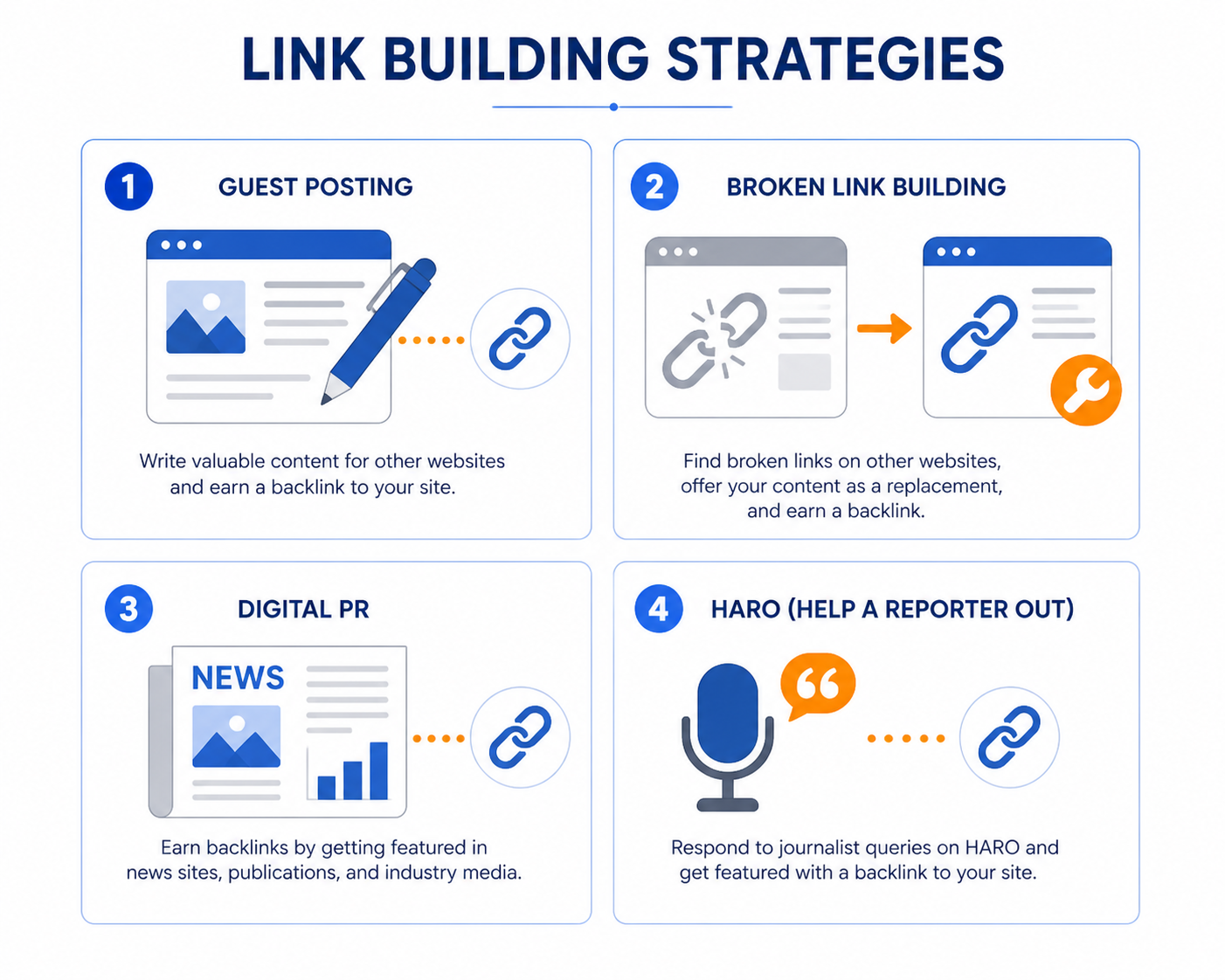
Links to Avoid
Some link building tactics will hurt more than help:
❌ Paid links (against Google guidelines)
❌ Link exchanges ("I'll link to you if you link to me")
❌ Private Blog Networks (PBNs)
❌ Automated link building tools
❌ Comment spam
❌ Directory submissions to low-quality sites
If a tactic feels manipulative, it probably is. Google's Penguin algorithm specifically targets unnatural link patterns.
Brand Signals and Mentions
Google tracks brand mentions even without links. A strong brand presence signals trust and authority.
Building Brand Mentions
Consistency matters: Use the same brand name everywhere. Inconsistent naming confuses both users and search engines.
PR and media coverage: Get featured in industry publications, podcasts, and news sites. Even unlinked mentions contribute to brand signals.
Speaking and events: Conference talks, webinars, and podcasts generate mentions and establish expertise.
Awards and recognition: Industry awards create natural mentions across multiple platforms.
Monitoring Brand Mentions
Set up alerts to track when people mention your brand:
- Google Alerts (free, basic)
- Mention (comprehensive monitoring)
- Brand24 (social media focus)
- Ahrefs Alerts (for backlink tracking)
When you find unlinked mentions, reach out and politely ask for a link. Most publishers are happy to add one.
Social Signals
Social media doesn't directly impact rankings, but it indirectly supports SEO in several ways.
Social Media's SEO Impact
Content distribution: Social sharing gets your content in front of people who might link to it.
Brand building: Active social presence strengthens brand signals.
Indexing: Social shares can help new content get discovered and indexed faster.
Traffic: Social traffic sends engagement signals to search engines.
Social Media Checklist
✅ Maintain active profiles on platforms where your audience lives
✅ Share new content consistently
✅ Engage with your community (not just broadcasting)
✅ Optimize profiles with consistent branding and links
✅ Use relevant hashtags strategically
✅ Encourage sharing with valuable, shareable content
Don't spread yourself thin. Focus on 2-3 platforms where your audience actually engages.
Local SEO (For Location-Based Businesses)
If you serve local customers, local SEO signals are critical.
Google Business Profile Optimization
Your Google Business Profile (formerly Google My Business) is the foundation of local SEO.
Complete every field: Business name, address, phone, hours, categories, description, services, products.
Add quality photos: Real photos of your business, team, products, and work.
Post regularly: Share updates, offers, and events through Google Posts.
Answer questions: Monitor and respond to questions in the Q&A section.
Local Citations
Citations are mentions of your business name, address, and phone number (NAP) across the web.
Priority directories:
- Yelp
- Yellow Pages
- Bing Places
- Apple Maps
- Industry-specific directories
Consistency is critical: Your NAP must be identical everywhere. Variations confuse search engines.
Reviews
Reviews directly impact local rankings and click-through rates.
How to get more reviews:
- Ask satisfied customers (timing matters—ask after positive experiences)
- Make it easy with direct links
- Follow up via email
- Train staff to request reviews
Managing reviews:
- Respond to every review, positive or negative
- Address negative reviews professionally
- Never fake reviews or incentivize with discounts
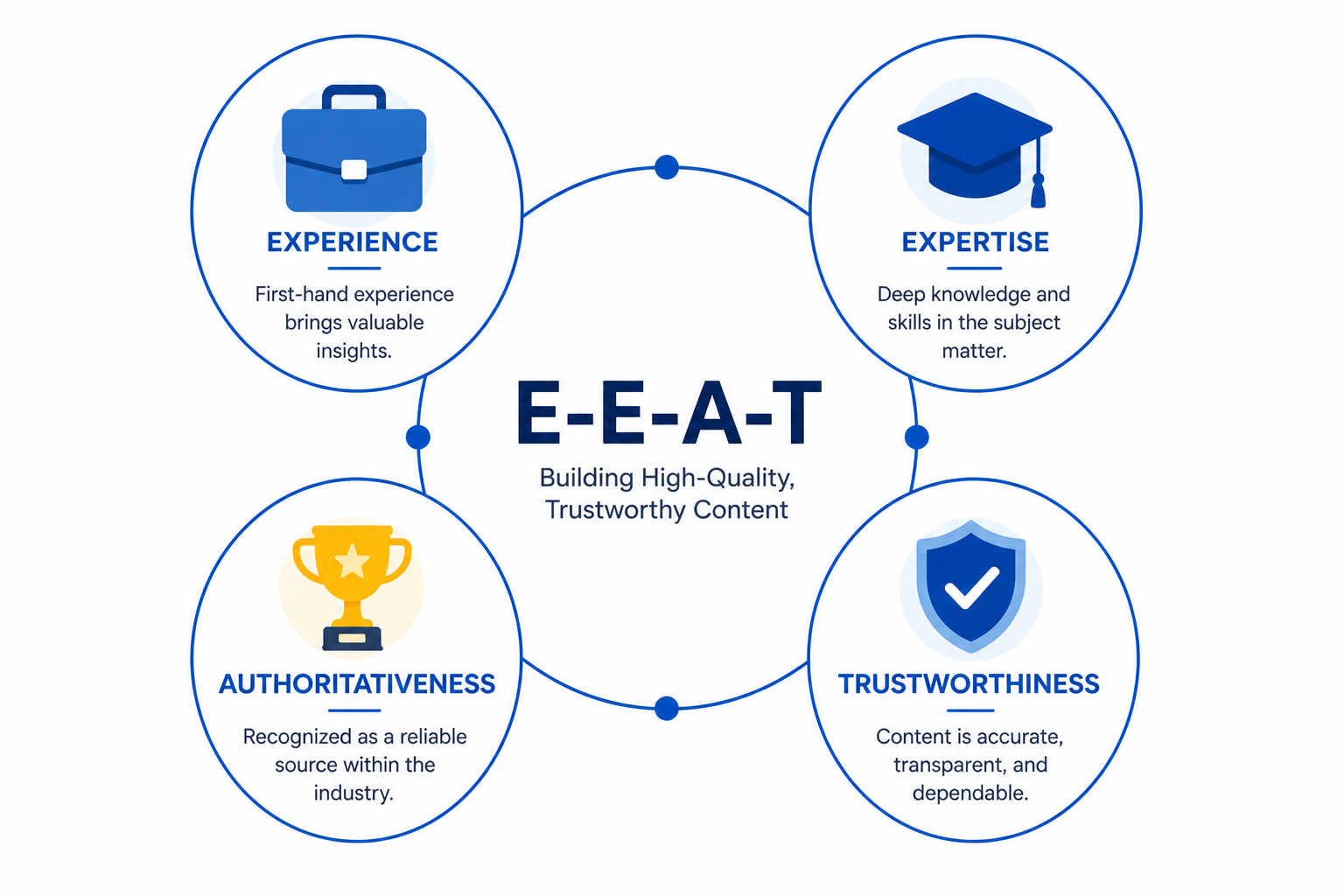
E-E-A-T: Experience, Expertise, Authoritativeness, Trustworthiness
Google's quality guidelines emphasize E-E-A-T. Off-page signals heavily influence these factors.
Demonstrating Expertise
Author credentials: Display author bios with relevant qualifications and experience.
Speaking engagements: Conferences, podcasts, and webinars establish expertise.
Publications: Guest posts on authoritative sites demonstrate recognized expertise.
Professional profiles: Maintain updated LinkedIn profiles for key team members.
Building Authority
Industry associations: Join and actively participate in industry organizations.
Awards and certifications: Display legitimate credentials and recognitions.
Media mentions: PR coverage in respected publications builds authority.
Partnerships: Associations with established brands signal trustworthiness.
Trust Signals
Reviews and testimonials: Third-party validation from real customers.
Case studies: Documented proof of results for clients.
Secure website: HTTPS is expected, but security badges add trust.
Contact information: Clear, accessible contact details including physical address.
Content Marketing and Link Magnets
The best off-page SEO happens naturally when you create content worth linking to.
Types of Link-Worthy Content
Original research: Conduct surveys, analyze data, or run experiments. Original data gets cited.
Comprehensive guides: The definitive resource on a topic attracts links from people writing about related subjects.
Tools and calculators: Free tools get linked as resources. Even simple calculators can attract significant links.
Infographics: Visual content is highly shareable when it presents data clearly.
Templates and frameworks: Provide practical tools people can use immediately.
Content Promotion
Creating link-worthy content isn't enough. You need to get it in front of the right people.
Outreach: Identify websites that cover similar topics. Reach out with a personalized pitch.
Community participation: Share in relevant online communities (Reddit, Quora, industry forums). Add value first, promote second.
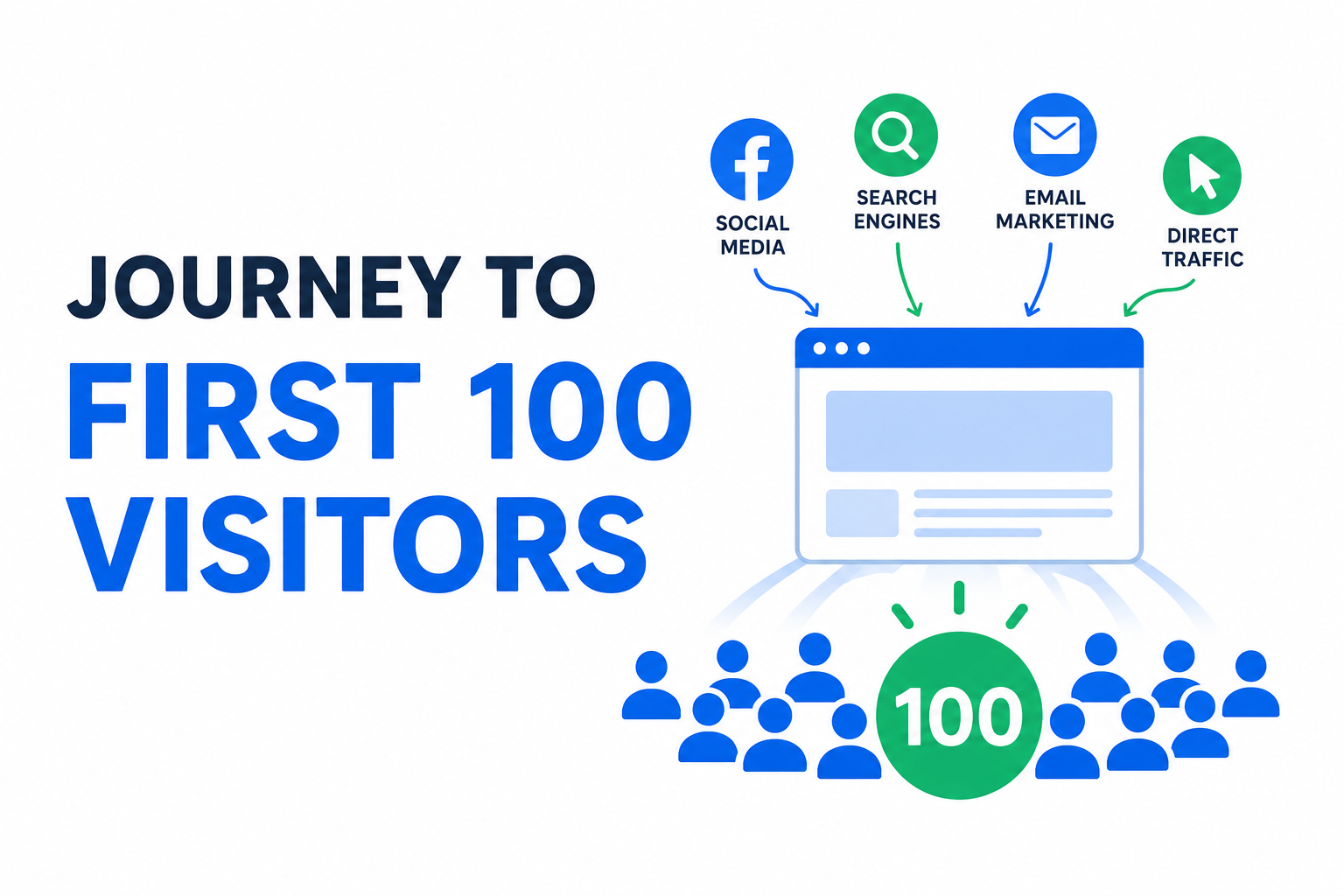
Email lists: Build an email list and notify subscribers of new content.
Social amplification: Promote through your social channels and encourage sharing.
Competitor Analysis
Understanding your competitors' backlink profiles reveals opportunities.
Analyzing Competitor Backlinks
Use tools like Ahrefs, SEMrush, or Moz to:
- Identify who links to your competitors
- Find linking patterns (what types of content attract links)
- Discover websites that link to multiple competitors but not you
- Spot guest posting opportunities on sites in your niche
Filling Link Gaps
If a website links to three of your competitors, they'd probably link to you too. These "link gap" opportunities are low-hanging fruit.
Create content that matches what they linked to, then reach out.
Technical Off-page Factors
Some off-page factors are technical rather than promotional.
Disavow Toxic Links
If spammy sites link to you, they can hurt your rankings. Google's Disavow Tool lets you tell Google to ignore specific links.
Use disavow carefully—only for clearly toxic links that you can't get removed manually.
Monitor Your Backlink Profile
Regularly audit your backlinks:
- Watch for sudden spikes in low-quality links (possible negative SEO)
- Track lost links to valuable pages
- Identify opportunities from new mentions
Off-page SEO Checklist Summary
Here's your actionable checklist:
Link Building
- Identify 10 guest posting opportunities in your niche
- Create one comprehensive resource worth linking to
- Set up broken link building process
- Register for HARO and respond to relevant queries
- Audit existing backlinks quarterly
Brand Building
- Set up brand mention monitoring
- Reach out to convert unlinked mentions to links
- Maintain consistent NAP across all platforms
- Build profiles on relevant industry directories
Social Signals
- Optimize social profiles with links
- Create shareable content regularly
- Engage authentically with your community
- Cross-promote content across platforms
Local SEO (if applicable)
- Claim and optimize Google Business Profile
- Build citations on top local directories
- Implement review generation strategy
- Respond to all reviews
Authority Building
- Display author credentials
- Pursue speaking opportunities
- Build relationships with industry publications
- Document case studies and results
The Long Game
Off-page SEO isn't quick. Building genuine authority takes months or years. But the results are durable—while algorithm updates can devastate sites with manipulative tactics, sites with authentic backlinks and strong brands weather changes well.
Start with what you can control: create excellent content, build real relationships, and serve your audience well. The links and mentions follow.
Need help building your website's authority? Contact Duo Dev for SEO strategy and implementation.