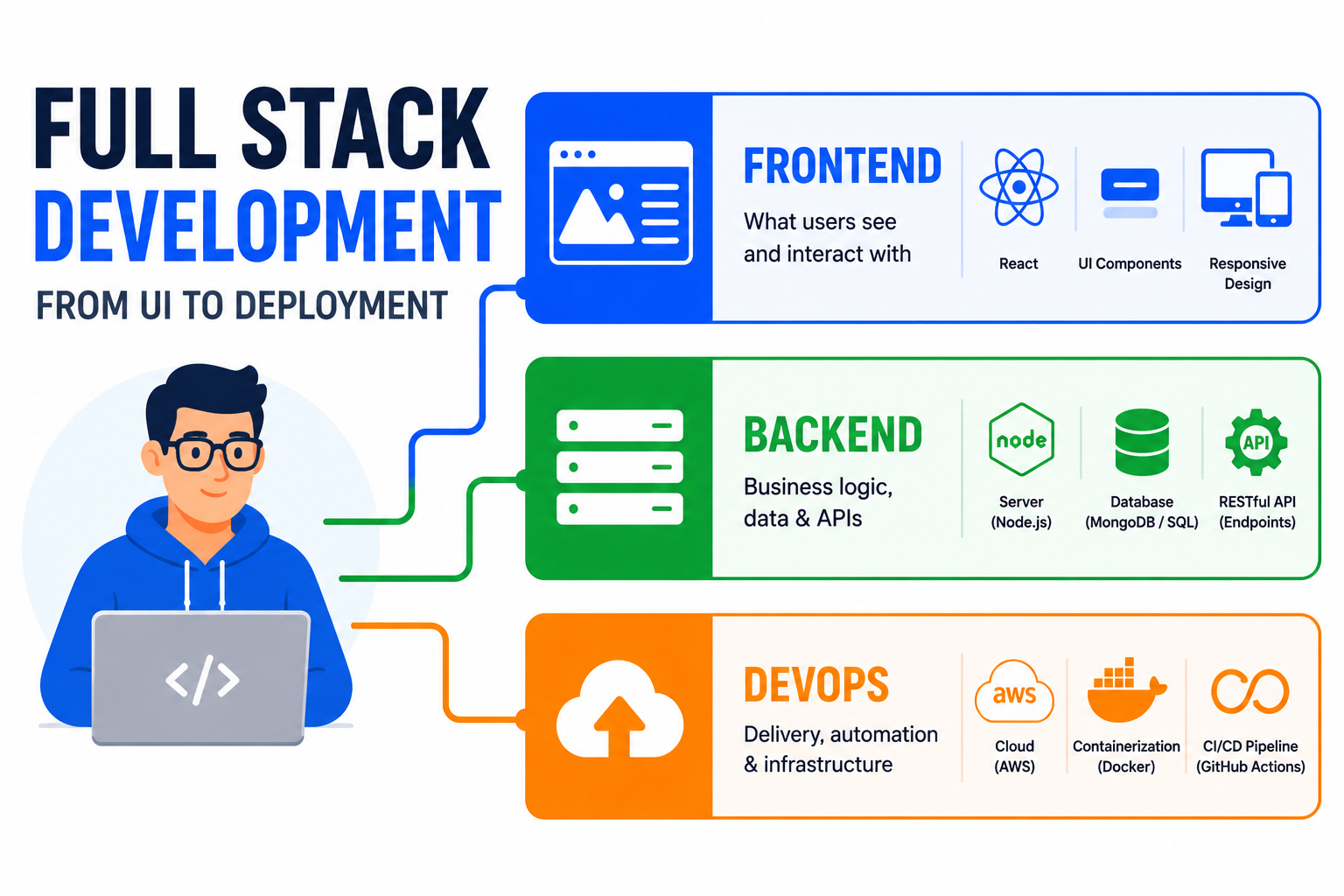
Choosing your tech stack feels like one of those decisions that'll determine whether your startup succeeds or fails. The pressure is real—change it later and you might need to rewrite everything.
Here's the thing, though: there's no universally "right" tech stack. Instagram was built on Python and Django. Facebook started with PHP. Twitter used Ruby on Rails before rewriting in Scala. Wildly different choices, all successful.
What matters isn't picking the "best" technology—it's picking the right technology for your specific situation. Your team, your product, your timeline, your budget, your expected scale. These factors shape what actually works for you.
Let's work through how to think about this decision.
Start with What You're Actually Building
Different products have different technical requirements. A real-time chat application needs different technology than an e-commerce platform. A data visualization tool has different constraints than a simple marketing website.
Before comparing frameworks, clarify:
What type of product is this?
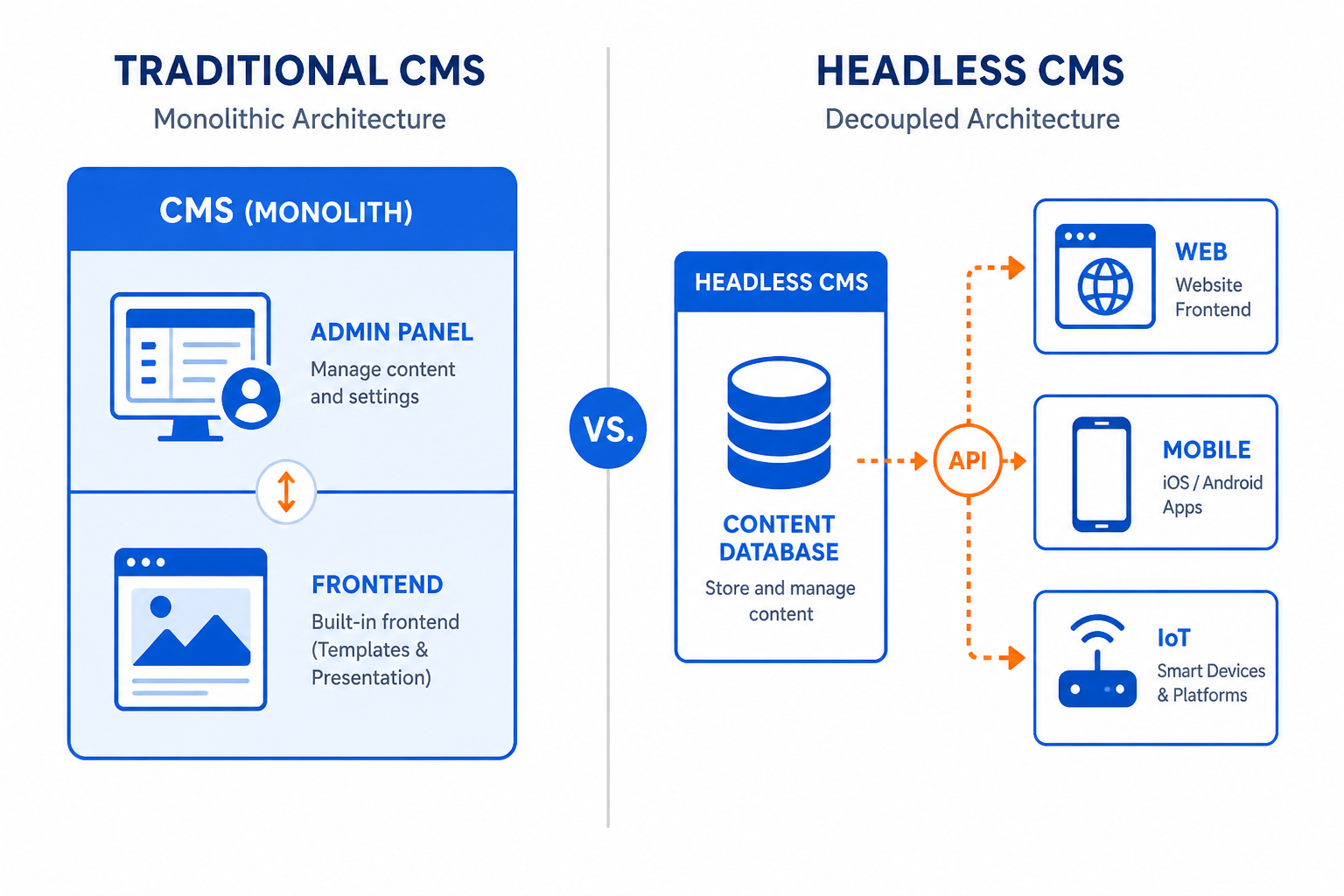
- Content-heavy website? Consider static site generators or CMS platforms.
- Interactive web application? Full-stack JavaScript or Python frameworks work well.
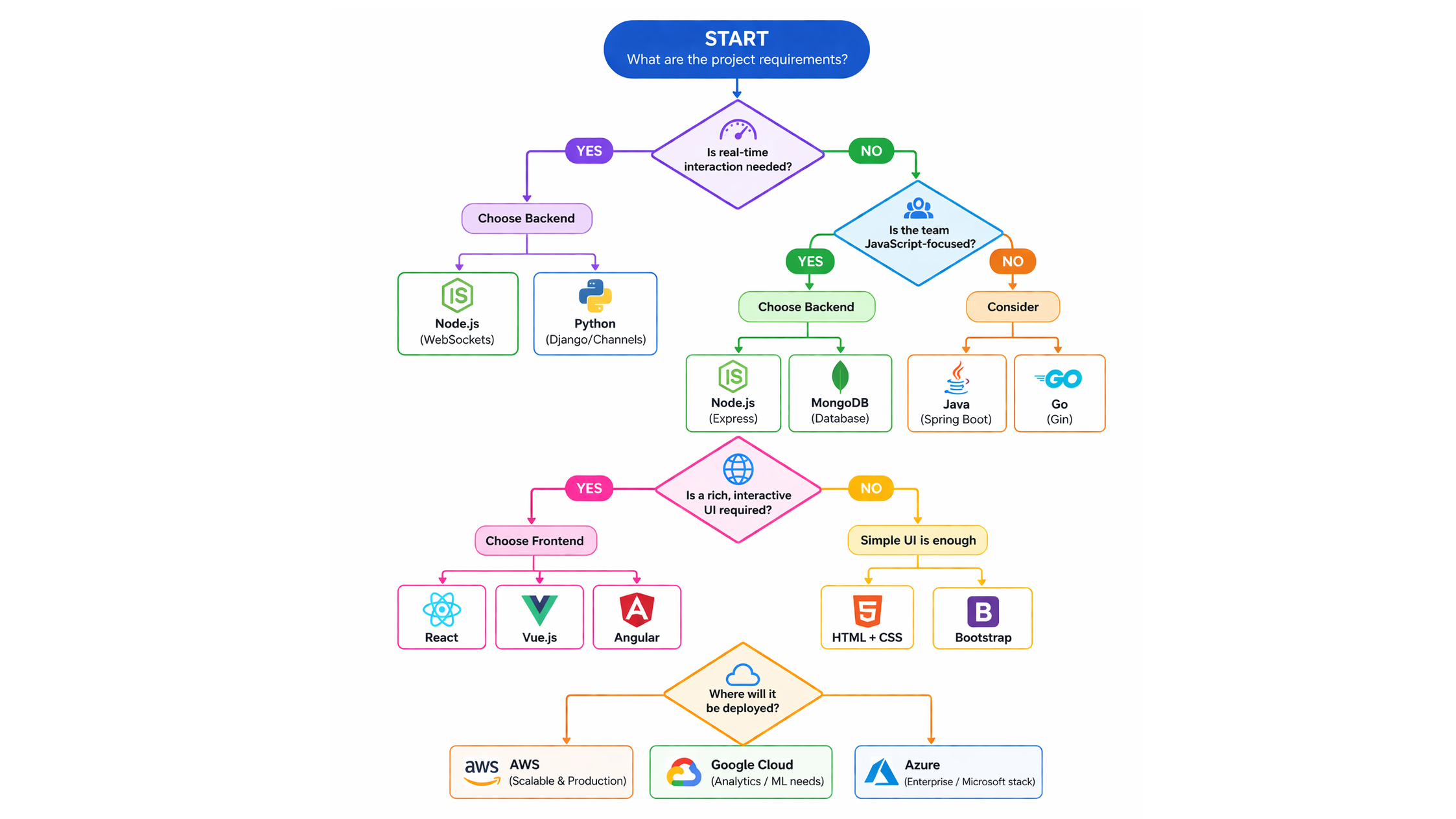
- Real-time features (chat, notifications)? You need WebSocket support and appropriate backend.
- Mobile app? Native, cross-platform, or progressive web app?
- Complex calculations or data processing? Languages and frameworks optimized for performance.
What features are essential for launch?
Your tech stack only needs to support what you're building now and the foreseeable future. Don't architect for ten million users when you're trying to get your first hundred.
What integrations matter?
Payment processing, email services, analytics, third-party APIs—some stacks have better library support for specific integrations. If you know you need Stripe payments and SendGrid email, check how well potential frameworks support those.
Consider Your Team's Existing Skills
The best tech stack on paper means nothing if nobody on your team can use it effectively. Learning curves are real, and startups rarely have time for extensive ramp-up periods.
What does your team already know?
If your developers are experienced in Python, Django or Flask will be productive choices. If they know JavaScript inside out, Node.js backends make sense. If they've built Rails applications before, Ruby on Rails gives you a head start.
Switching to unfamiliar technology means:
- Slower initial development
- More bugs from inexperience
- Difficulty hiring because you need specialists
- Higher risk of architectural mistakes
This doesn't mean never learn new technologies. But be honest about the cost. A team learning Rust while building their first product faces steeper challenges than one using familiar tools.
Can you hire for this stack?
Some technologies have larger talent pools than others. JavaScript, Python, and Java developers are relatively abundant. Developers experienced in niche frameworks might be harder to find and more expensive.
Consider your hiring market. Are you in a tech hub with diverse talent, or a smaller market where options are limited? Remote-first? That opens up the talent pool but still—popular technologies mean easier recruiting.
Balance Speed Against Long-Term Needs
Startups operate under time pressure. You need to ship, validate, iterate. Spending months perfecting architecture before users ever see the product is a common trap.
Optimize for speed to market—with limits.
Some technologies let you move faster early on:
- High-level frameworks (Rails, Django, Laravel) handle common patterns
- Full-stack JavaScript means fewer context switches
- Managed services reduce infrastructure setup
- Pre-built components and libraries accelerate development
But speed has to be balanced against not painting yourself into a corner. Some questions:
- Can this handle 10x current usage if growth happens?
- How hard would it be to add major features later?
- Does this create technical debt that compounds painfully?
The goal is "fast enough" without "too brittle." Perfect architecture isn't the goal—functional architecture that doesn't collapse under reasonable growth is.
Avoid premature optimization.
You don't need Kubernetes on day one. You don't need microservices before you have meaningful traffic. You don't need a global CDN before your content reaches a few thousand people.
Start simpler than you think necessary. A basic deployment that you understand is better than a complex system you copied from blog posts about scaling Netflix.
Evaluate Database Options Carefully
Database choice is often more permanent than framework choice. Migrating data between fundamentally different databases is painful and risky.
Relational databases (PostgreSQL, MySQL):
- Strong data integrity and consistency
- Complex queries with joins
- Well-understood, battle-tested
- Good choice for most applications
Document databases (MongoDB, DynamoDB):
- Flexible schemas, good for evolving data structures
- Horizontal scaling often easier
- Better for certain types of unstructured data
- Less suited for complex relationships
When do you need what?
Most startups should default to PostgreSQL. It's powerful, reliable, handles most use cases, and won't limit you unexpectedly. The "NoSQL is faster" argument rarely matters at startup scale, and PostgreSQL's JSON support gives flexibility when needed.
Consider document databases if:
- Data genuinely lacks consistent structure
- Schema changes would be very frequent
- You're building something where eventual consistency is acceptable
Don't choose a database because it sounds modern. Choose it because it fits your data access patterns.
Think About Your Infrastructure Approach
How will you deploy and run your application? This affects development workflow, costs, and operational complexity.
Platform as a Service (PaaS):
Options like Heroku, Render, Railway, Vercel (for frontend/serverless), or AWS Elastic Beanstalk.
✅ Fast to set up
✅ Managed infrastructure
✅ Good for small teams without DevOps expertise
❌ Less control over environment
❌ Can become expensive at scale
❌ Platform-specific constraints
Infrastructure as a Service (IaaS):
AWS EC2, Google Cloud Compute, DigitalOcean Droplets.
✅ Full control over environment
✅ Often cheaper at scale
✅ Flexibility to customize
❌ Requires DevOps knowledge
❌ More setup and maintenance
❌ Security is your responsibility
Serverless:
AWS Lambda, Google Cloud Functions, Vercel Functions.
✅ Scale automatically
✅ Pay only for usage
✅ No server management
❌ Cold starts can affect performance
❌ Different programming model
❌ Can be expensive at high volume
For most startups, PaaS or managed cloud services strike the right balance. Focus engineering effort on your product, not infrastructure. You can migrate to more customized setups when scale demands it.
Common Stack Combinations That Work
Rather than evaluating every technology individually, here are proven combinations:
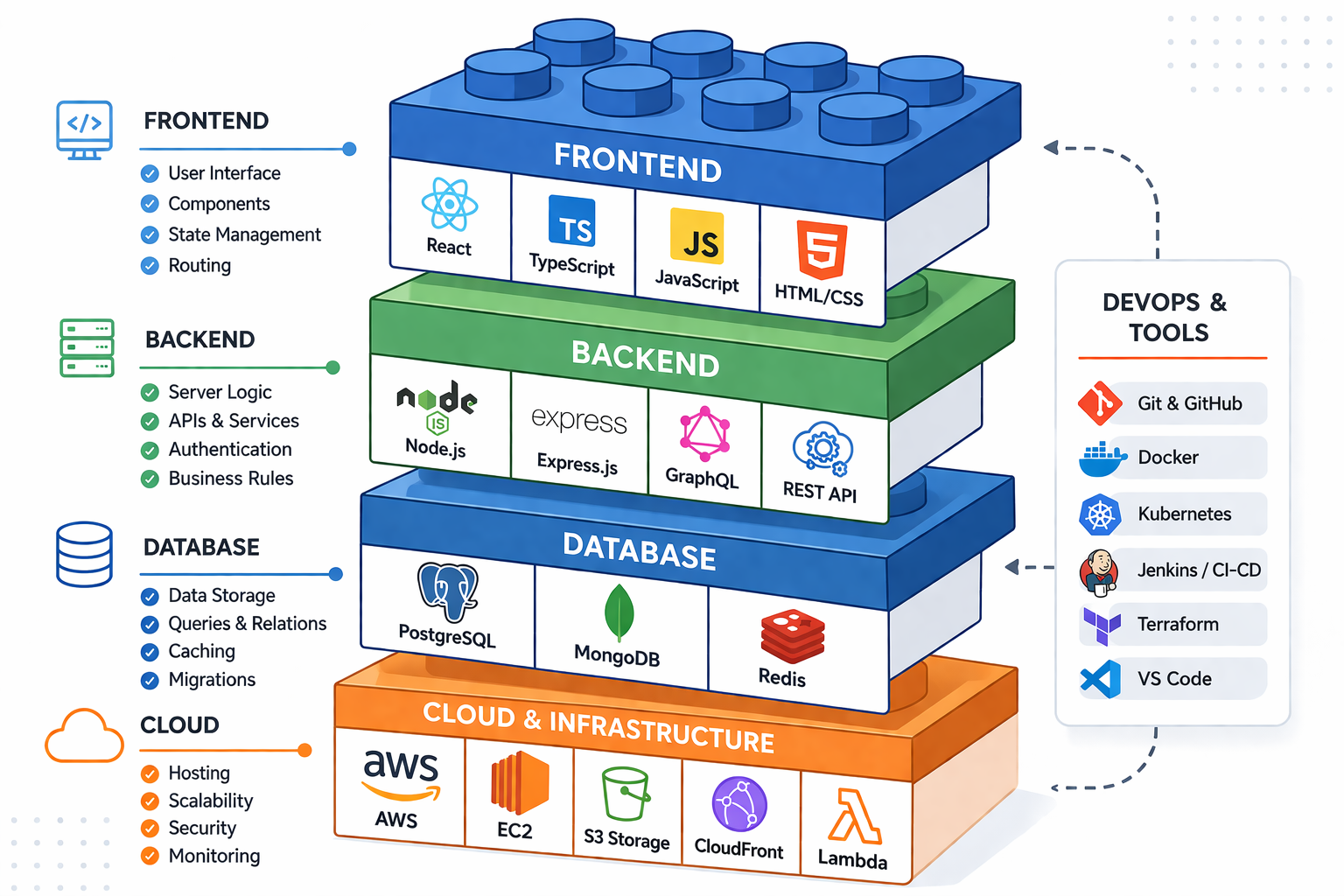
JavaScript Full Stack (MERN/MEAN):
- MongoDB or PostgreSQL + Express.js + React/Vue/Angular + Node.js
- One language across stack
- Huge ecosystem
- Good for real-time features
- Team can work across layers
Python Stack:
- PostgreSQL + Django/FastAPI + React/Vue
- Excellent for data-heavy applications
- Strong ML/AI library support
- Django provides admin panels, ORM, authentication out of the box
- Good for APIs and backend logic
Ruby on Rails:
- PostgreSQL + Ruby on Rails + Hotwire/React
- Convention over configuration
- Rapid prototyping
- Built-in everything: ORM, migrations, testing, background jobs
- Smaller but passionate ecosystem
Laravel (PHP):
- MySQL/PostgreSQL + Laravel + Vue/React/Livewire
- Feature-rich framework
- Good documentation
- Large talent pool
- Shared hosting friendly (though not recommended)
Go Stack:
- PostgreSQL + Go + React/Vue
- High performance
- Good for APIs and microservices
- Steeper learning curve
- Smaller web ecosystem
None of these are wrong. They're all powering successful products right now. The choice depends on your team's skills, your product needs, and your preferences.
Questions to Stress-Test Your Choice
Before committing, pressure-test your decision:
Can you build a prototype quickly?
Pick a small feature and build it. How long does it take? Where do you get stuck? Are answers easy to find online?
How's the documentation?
Good documentation saves countless hours. Check official docs and community resources. Are tutorials current? Are common problems addressed?
What's the community like?
Active community means bugs get found and fixed, questions get answered, and the technology continues improving. Abandoned or declining projects carry risk.
Who else uses this for similar products?
Look for case studies or examples of products like yours using the stack. If successful companies with similar needs chose it, that's validating.
What are the known weaknesses?
Every technology has tradeoffs. Knowing what they are helps you decide if they matter for your situation.
Making the Decision
If you've read this far, you might be hoping for a simple answer. Unfortunately, the honest answer is: it depends.
But here's a framework for decision-making:
-
List your constraints. Team skills, timeline, budget, must-have features.
-
Identify deal-breakers. What would eliminate a choice entirely? Lack of specific integration? No available developers?
-
Compare top 2-3 options. Build a small prototype in each if time allows. See how they feel.
-
Trust experience over hype. What your team knows and can hire for matters more than what's trending on Twitter.
-
Accept imperfection. No choice is perfect. Make a reasonable decision and move forward. You can always evolve later.
When to Revisit the Decision
Sometimes the initial choice turns out to be wrong, or business needs change. Signs it's time to reconsider:
- Performance problems can't be solved within current architecture
- Hiring has become prohibitively difficult
- The technology is no longer maintained or is declining
- Business requirements have fundamentally changed
- Technical debt has accumulated to the point of gridlock
Rewriting isn't failure—it's normal for growing companies. Many successful products have gone through major technical transformations. But it's expensive, so choose thoughtfully to minimize how often it's necessary.
Need help evaluating tech stacks or building your product? Duo Dev Technologies has helped startups choose and implement the right technologies for their specific needs. Reach out for a conversation about your project.