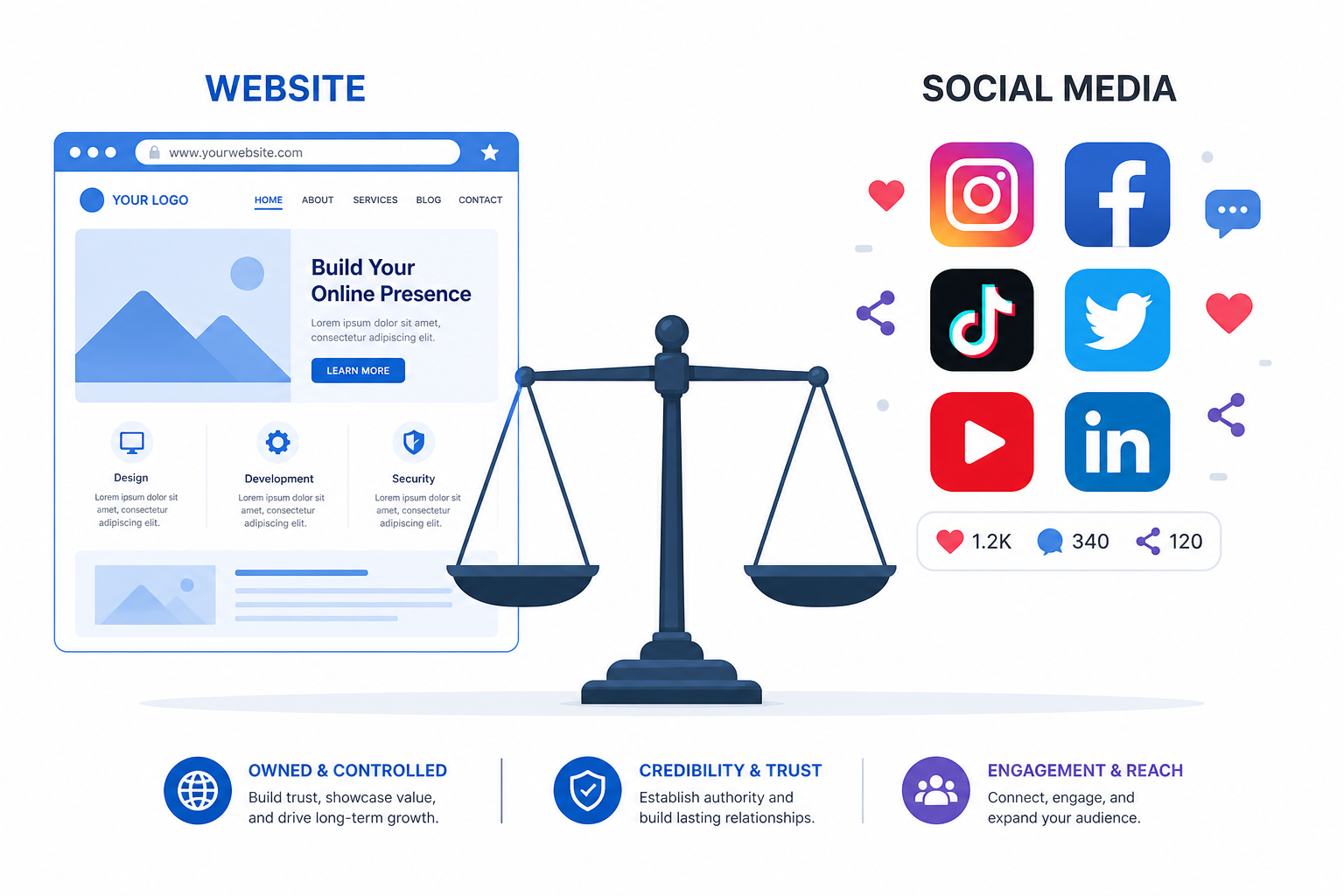
"We don't need a website. We're on Instagram."
I hear this from business owners all the time. And honestly? It's one of the most expensive mistakes a business can make.
Social media is powerful. Websites are foundational. They serve different purposes, and understanding when to use each could mean the difference between building a sustainable business and renting your entire online presence.
Let's break down what each platform actually does for your business.
Ownership: The Fundamental Difference
Here's the reality that most business owners overlook:
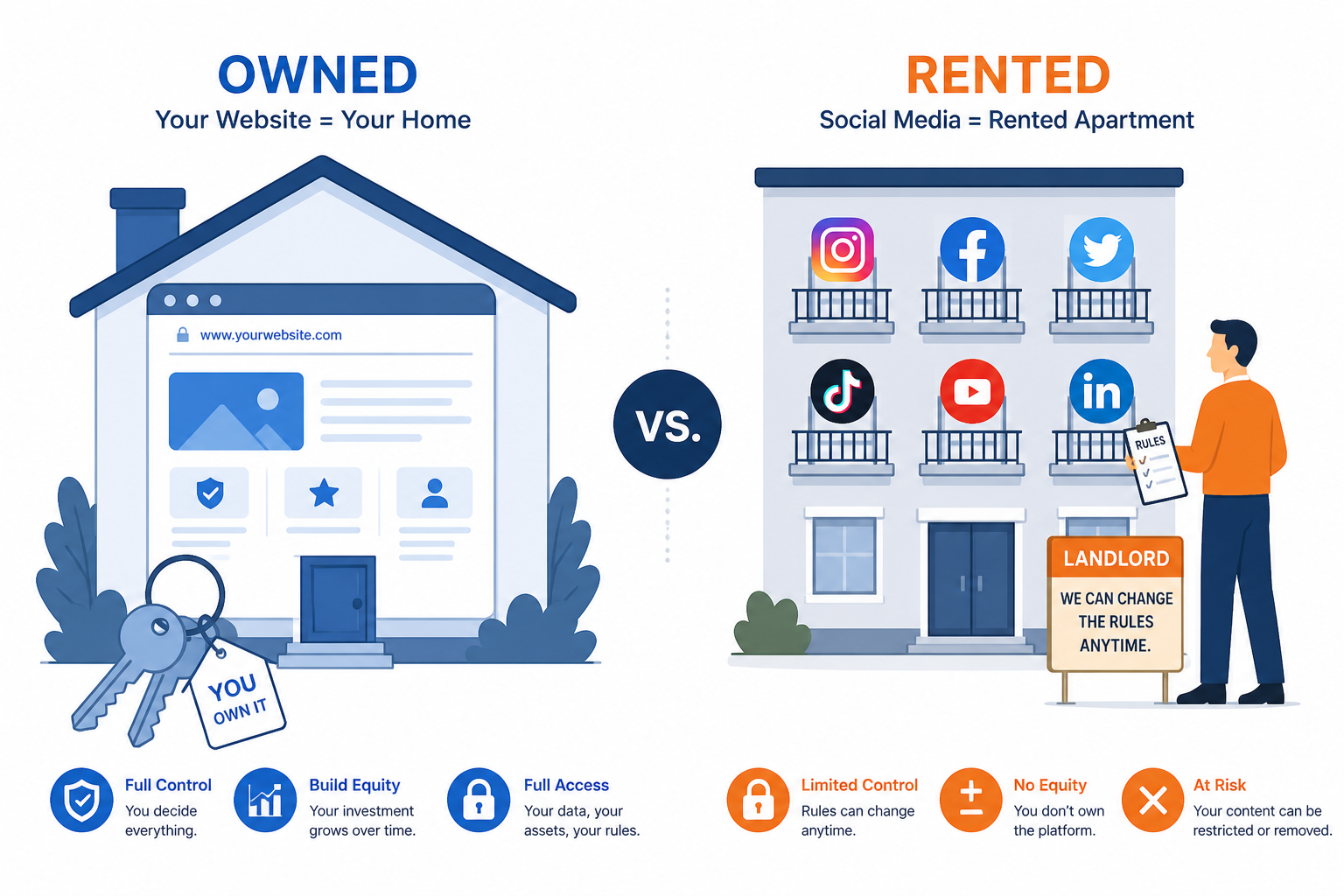
Your website is property you own. Social media is a space you rent.
When you build a website, you control:
- The domain (your digital address)
- The content and how it's displayed
- The user experience
- The data you collect
- The rules of engagement
When you build on social media, the platform controls:
- Who sees your content (algorithm changes constantly)
- What features you can use
- Whether your account exists tomorrow
- How much you pay to reach your own followers
This isn't theoretical. Businesses lose access to Instagram accounts due to hacks, mistaken violations, or policy changes. Overnight, years of audience building vanishes.
Your website? It's yours. Period.
What Websites Do Best
Establish Credibility
Let's be honest—the first thing potential customers do is Google your business. If they find a professional website, you're credible. If they find nothing (or worse, a Facebook page with broken links), doubts creep in.
A website signals:
- You're established and serious
- You've invested in your business
- You're not going anywhere
- You're professional enough to have proper infrastructure
This credibility matters especially for:
- B2B services
- High-ticket purchases
- Professional services (lawyers, doctors, consultants)
- Local businesses competing with chains
Control the Narrative
On social media, your profile sits among competitors, distractions, and random content. Your carefully crafted message competes with cat videos.
On your website, visitors focus entirely on you. You control:
- What they see first
- How they navigate
- What story unfolds
- What action they take
This focused environment converts better than scattered social feeds.
SEO and Discoverability
Social media posts have a shelf life of hours. A blog post on your website can rank in Google for years.
When someone searches "best [your service] in [your city]," your website can appear. Your Instagram post won't.
Search intent matters. People searching Google are actively looking for solutions. People scrolling Instagram are passing time. Both audiences matter, but search traffic often has higher intent to buy.
Collect Data and Build Assets
Your website lets you:
- Build an email list (an asset you own)
- Track visitor behavior with analytics
- Install retargeting pixels
- Capture leads with forms
- Understand what content works
This data belongs to you. Social media gives you limited insights and can change what's available at any time.
E-commerce and Direct Sales
Selling on Instagram requires jumping through hoops. Selling on your website gives you complete control over:
- Product presentation
- Checkout experience
- Upsells and cross-sells
- Customer data
- Payment processing fees
If you sell products, your website isn't optional—it's your most profitable sales channel.
What Social Media Does Best
Discovery and Reach
Social media excels at getting in front of people who've never heard of you. The viral potential doesn't exist with websites.
On Instagram, TikTok, or LinkedIn, one piece of content can reach millions. That kind of organic reach requires years of SEO work on a website.
For new businesses or those launching new products, social media provides discovery at scale.
Community and Engagement
Social media is inherently social. Websites are typically one-directional. On social, you can:
- Have real-time conversations
- Build community around your brand
- Get immediate feedback
- Create personal connections
- Show personality beyond polished marketing
This engagement builds relationships that pure websites struggle to match.
Content Testing
Social media gives instant feedback. Post something, see engagement within hours. This rapid iteration helps you understand:
- What topics resonate
- What format works
- What messaging lands
- What your audience actually wants
Use social media to test, then develop winning ideas into website content.
Staying Top of Mind
Your website sits passively, waiting for visitors. Social media actively appears in feeds.
Regular posting keeps your brand visible. When followers need your service, they think of you because they saw your post yesterday.
This passive awareness building is difficult to replicate elsewhere.
The Real Answer: You Need Both
The website vs social media debate presents a false choice. Smart businesses use both strategically.
Social Media Drives to Website
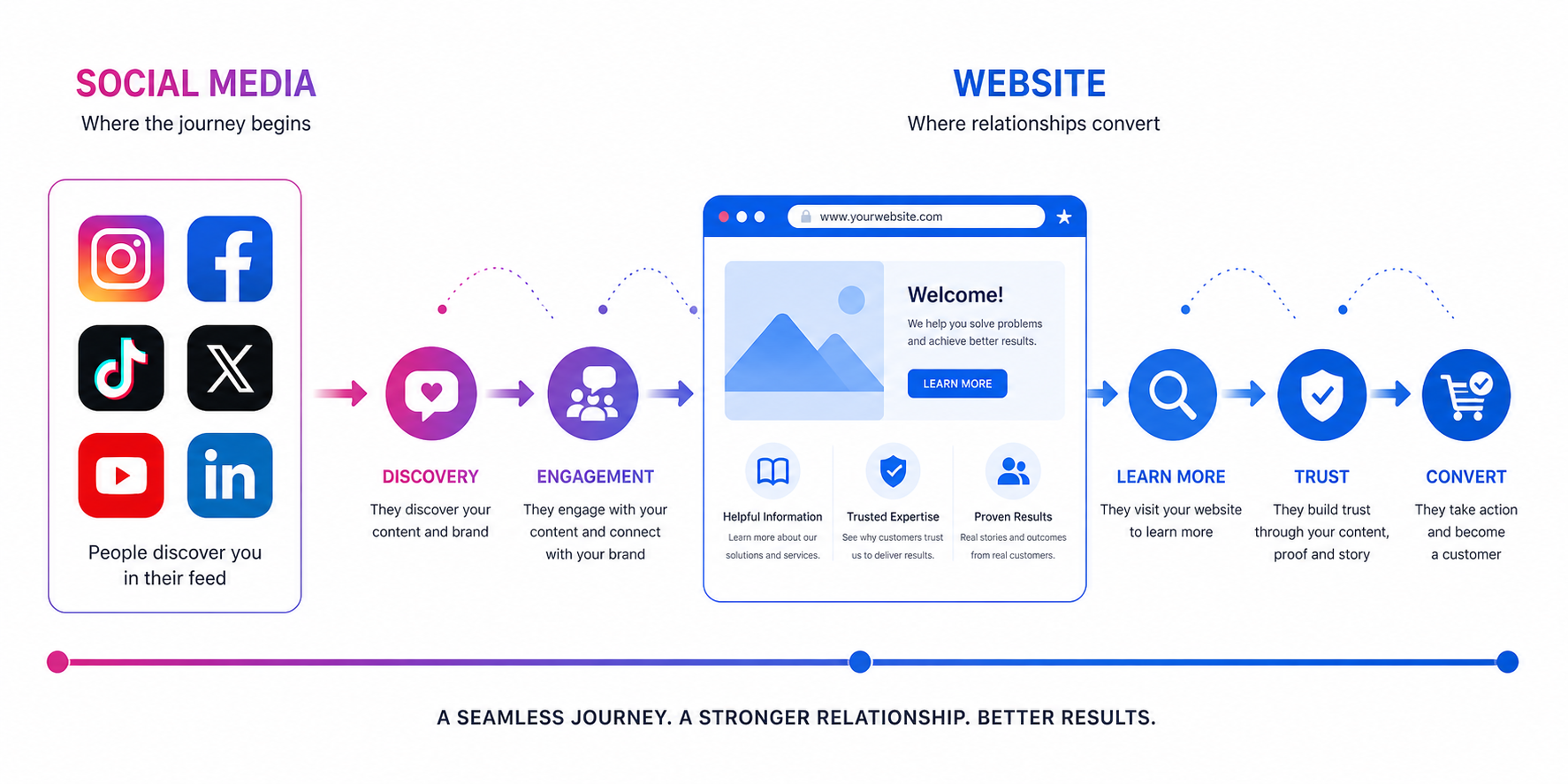
Think of social media as the top of your funnel:
- People discover you on social
- They click your bio link
- They land on your website
- They learn more, build trust
- They take action (buy, subscribe, contact)
Social media opens doors. Your website closes deals.
Website Supports Social Content
Your website's blog posts become social content. One comprehensive article spawns:
- Multiple social posts
- Quote graphics
- Short-form videos
- Discussion threads
- Email newsletter content
Create once on your website, distribute everywhere through social.
Different Platforms for Different Purposes
| Purpose | Best Platform |
|---|---|
| Building credibility | Website |
| Brand discovery | Social Media |
| SEO / Long-term traffic | Website |
| Real-time engagement | Social Media |
| Detailed information | Website |
| Community building | Social Media |
| E-commerce | Website |
| Staying top of mind | Social Media |
| Collecting emails | Website |
| Viral potential | Social Media |
When to Prioritize Website
Put website first if:
- You're B2B: Business buyers research before contacting. They need detailed information that social posts can't provide.
- You sell high-ticket items: Big purchases require trust, and trust comes from comprehensive websites.
- You rely on search traffic: If people search for what you do, SEO matters more than social.
- You want long-term assets: Website content compounds over time. Social content disappears.
- You're building an email list: Email is the most valuable marketing asset, and websites capture it best.
When to Prioritize Social Media
Put social first if:
- You're visual: Fashion, food, design, and lifestyle brands benefit from visual platforms.
- You're personal brand-focused: Coaches, creators, and influencers often build audiences on social first.
- You're testing a new idea: Validate with social engagement before building a full website.
- You have no budget: A free Instagram presence beats no online presence.
- Your audience lives there: If your customers scroll TikTok all day, be there.
Building Your Digital Strategy
Here's a practical framework:
Phase 1: Foundation
Build a basic website. It doesn't need to be complex. Key pages:
- Home
- About
- Services/Products
- Contact
This gives you a home base. Something to link to. Something that shows up in searches.
Phase 2: Presence
Choose 1-2 social platforms where your audience is active. Build presence consistently. Focus on value, not just promotion.
Phase 3: Growth
Develop website content that ranks for searches. Use social to amplify that content. Drive social traffic to website. Capture emails.
Phase 4: Scale
Optimize conversion on website. Scale advertising on both platforms. Test, measure, improve continuously.
Common Mistakes to Avoid
Mistake 1: Only being on social media
Your Instagram can disappear overnight. Your email list can't.
Mistake 2: Neglecting social after building a website
A website nobody visits is worthless. Social drives awareness.
Mistake 3: Being everywhere poorly
Better to excel on two platforms than be mediocre on six.
Mistake 4: Not connecting them
Every social profile should link to your website. Every website page should have social sharing.
Mistake 5: Treating them identically
Website visitors have different needs than social scrollers. Adapt your approach.
The Bottom Line
Social media is rented land. Your website is owned property.
Build on rented land for discovery and engagement. Own property for credibility, control, and long-term value.
The businesses that thrive online do both well. They use social media to reach people, then bring them home to a website that converts interest into action.
If you don't have a website yet, that's the priority. If you have a website but no social presence, start building one. The goal is an integrated digital presence where each platform strengthens the others.
Your digital strategy shouldn't be website OR social media. It should be website AND social media, working together.
Ready to build a website that works with your social media strategy? Let's talk. Duo Dev creates websites designed for conversion.