You've built the product. It works. Now what?
Getting first customers is the hardest part of building a SaaS business. No brand awareness. No case studies. No referrals. Just you, your product, and a lot of rejection.
But those first customers are also the most important. They validate your idea, provide feedback, and become your earliest advocates.
Here's how to find them.
Before You Launch: Validate Demand
The best time to find customers is before you build.
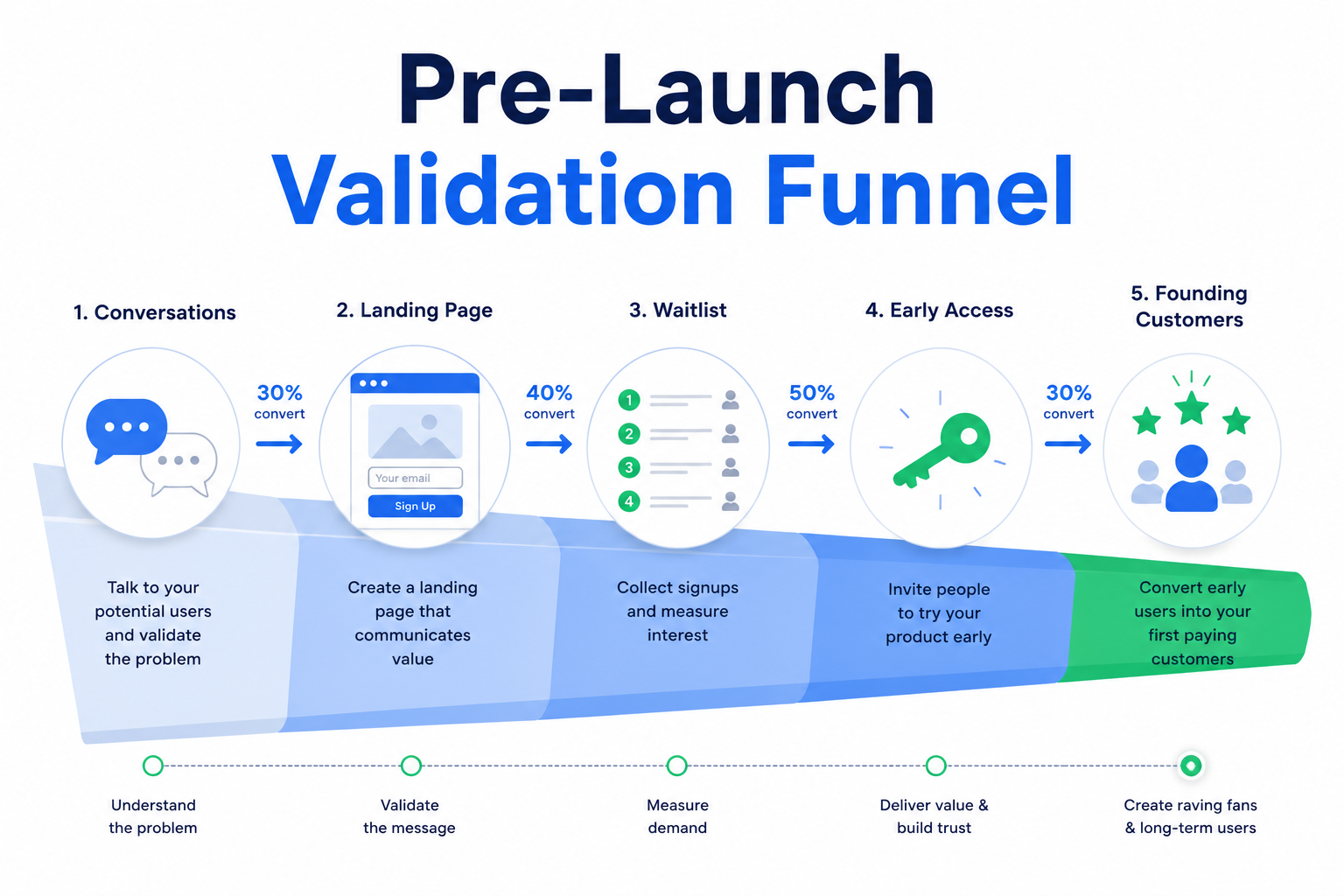
Talk to Potential Customers
Find people who might use your product. Talk to them:
- Where does this problem hurt most?
- How are you solving it now?
- What would an ideal solution look like?
- Would you pay for this? How much?
Not surveys. Conversations. You need depth, not data volume.
Pre-sell Before Building
Can you sell something that doesn't exist yet?
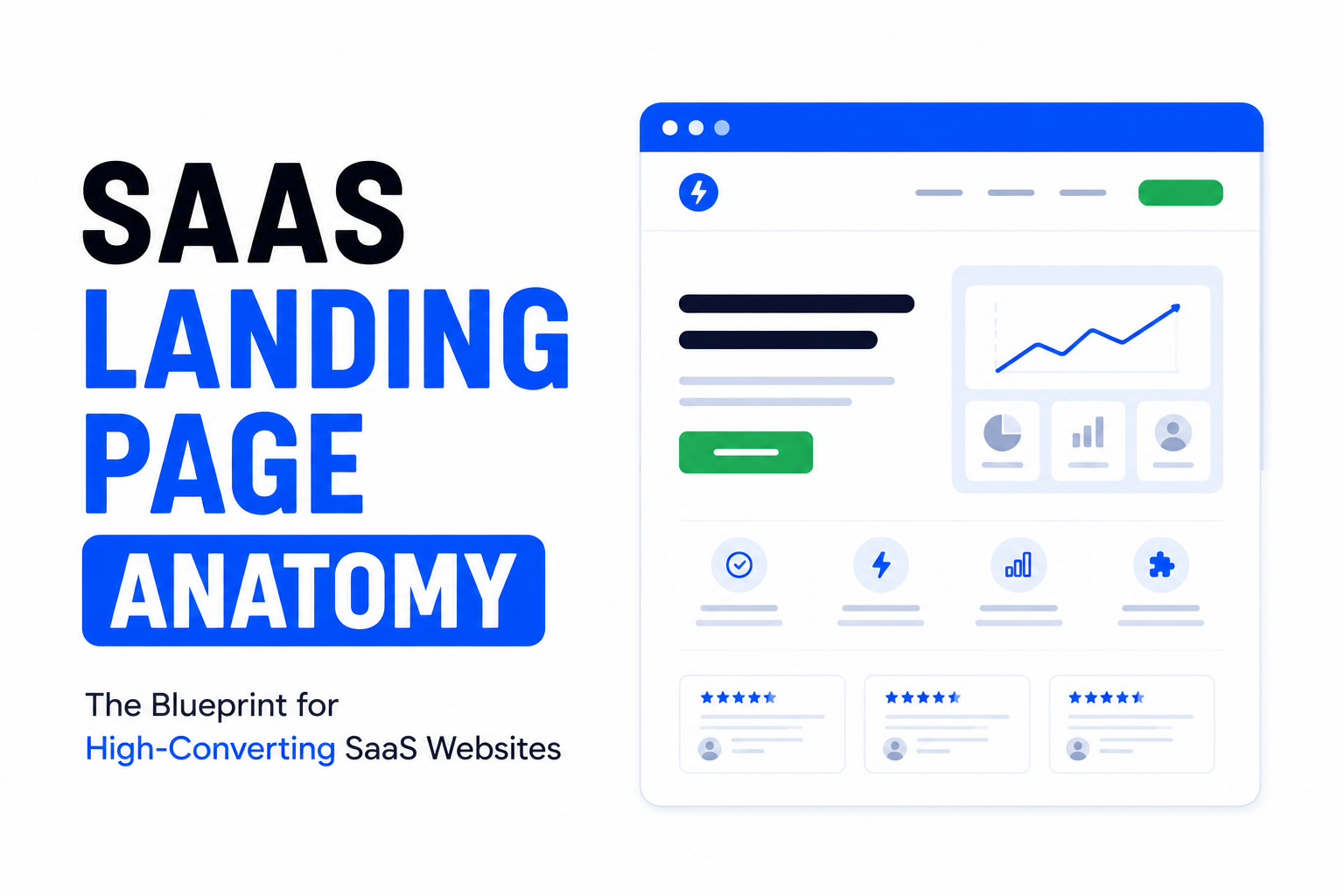
- Landing page with email capture
- Founding member pricing for early access
- Waitlist with deposits
If you can't convince anyone to sign up before the product exists, that's valuable information.
Build in Public
Share your building process publicly:
- Twitter/X threads about progress
- Blog posts on problems you're solving
- YouTube videos of development
This builds audience before you need them.
Finding Your First 10 Customers
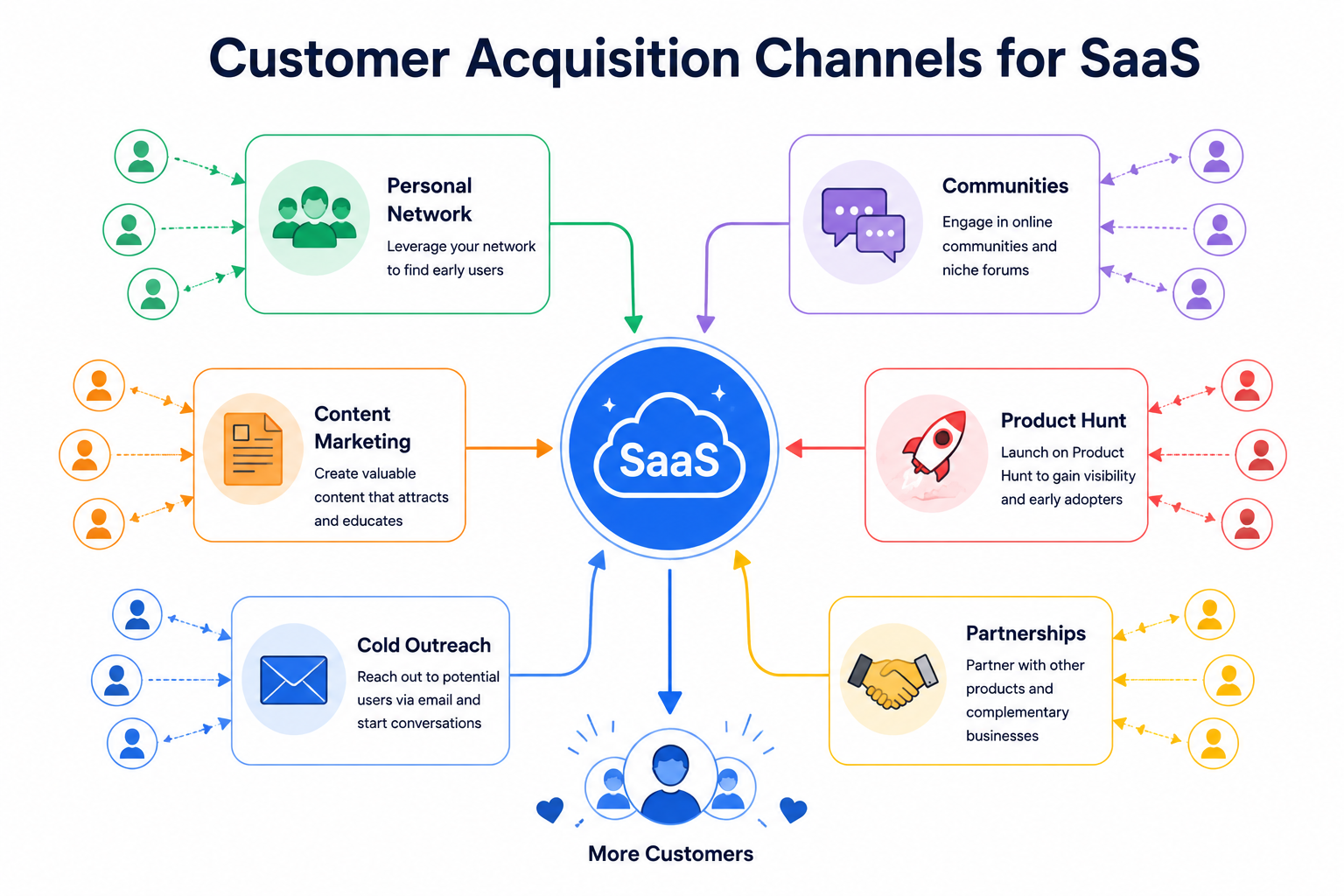
Personal Network
Start with people you know:
- Former colleagues
- Industry friends
- LinkedIn connections
- Online community members
Your first customers often come from one or two degrees of separation.
Script:
"Hey [Name], I've been building something that helps [target customer] with [problem]. You came to mind because [reason]. Would you be up for trying it and giving me honest feedback? I'd love your perspective."
Not a sales pitch. A request for help.
Your Existing Audience
If you've built any audience—blog readers, newsletter subscribers, Twitter followers—these are warm leads.
- Email your list about the launch
- Post on social channels
- DM engaged followers
Even a small audience (100-500 people) can yield first customers.
Communities Where Customers Hang Out
Find where your target customers already gather:
- Reddit subreddits
- Discord servers
- Slack communities
- Facebook groups
- Industry forums
- Hacker News (for dev tools)
Don't spam. Contribute value first. Become a known presence. Then mention your product where relevant.
Direct Outreach
Cold outreach works, especially for B2B SaaS.
Where to find prospects:
- LinkedIn (search by title, company)
- Twitter/X (follow relevant hashtags)
- Company websites (team pages)
- Competitor reviews (G2, Capterra)
Effective cold email structure:
- Specific observation about their situation
- Problem you solve (briefly)
- Social proof or credibility
- Low-friction ask (demo, trial, conversation)
Example:
Subject: Question about [specific challenge]
Hi [Name],
I noticed [Company] just [specific event/growth]. When teams scale like that, [problem] usually becomes a bottleneck.
I built [Product] specifically for this—it helps [specific benefit]. [Brief social proof].
Would you be open to a 15-minute call to see if it might help?
[Your name]
Personalization is non-negotiable. Generic templates get ignored.
Launch Strategies That Work
Product Hunt Launch
Product Hunt can drive hundreds of signups in one day.
Preparation:
- Build relationships on PH before launch
- Recruit hunter with followers (if possible)
- Prepare assets (description, images, video)
- Line up supporters for launch day
Launch day:
- Post at 12:01 AM PT
- Engage with every comment
- Share across your channels
- Ask supporters to upvote and comment
Top 5 placement can yield significant traffic.
Hacker News
If you're building developer tools, HN can be powerful.
- "Show HN" posts for launching products
- Quality matters more than timing
- Be ready to answer technical questions
- Don't game votes (they detect it)
Beta Launch with Urgency
Create scarcity around early access:
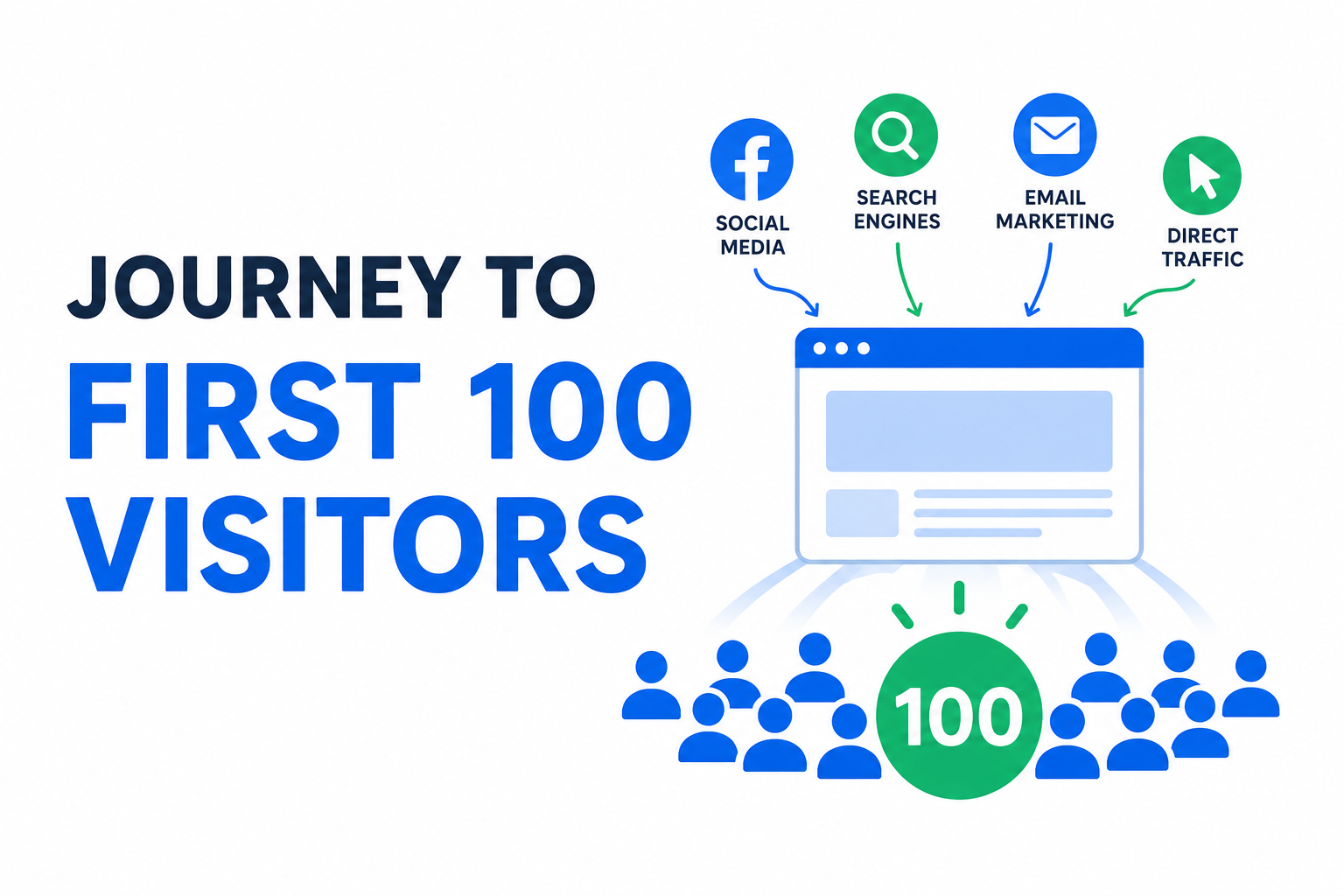
- Limited beta slots (first 100 users free)
- Founding member pricing (never available again)
- Early access to features
Scarcity motivates action.
Content Marketing from Day One
SEO-Driven Content
Start creating content that ranks:
- Answer questions your target customers ask
- Target long-tail, low-competition keywords
- Build topical authority over time
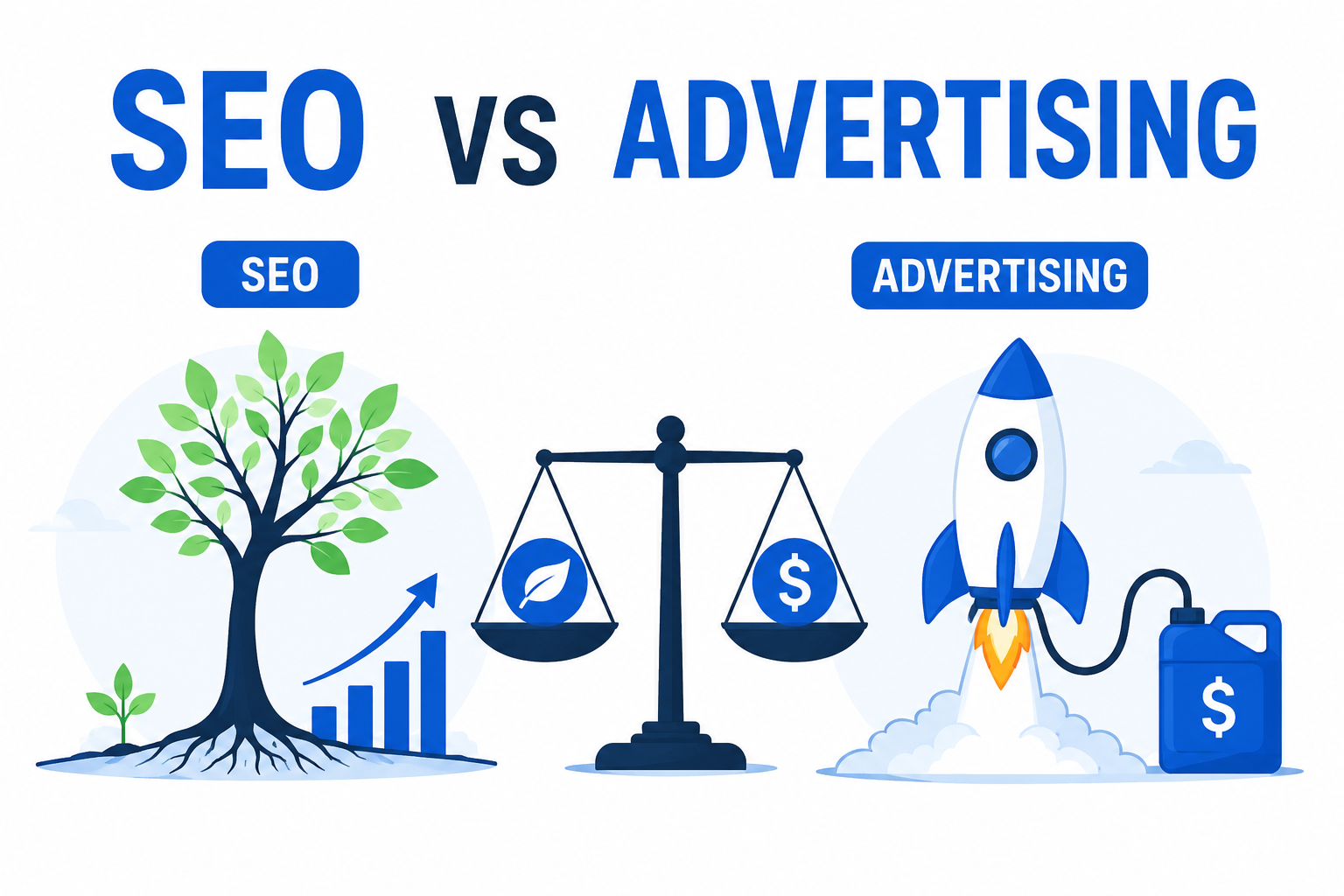
SEO compounds. Content created now pays dividends for years.
See our Keyword Research Guide for Beginners for starting strategies.
Comparison Content
Create comparisons with alternatives:
- "[Your Product] vs [Competitor]"
- "Best [Category] Tools in 2026"
- "Alternatives to [Known Tool]"
People searching these are actively considering solutions.
Problem-Focused Content
Write about the problems you solve:
- Not "Our amazing features"
- Yes "How to solve [painful problem]"
Position yourself as expert in the problem space.
Partnerships and Integrations
Complementary Tools
Find tools your customers already use. Build integrations.
If you're a CRM, integrate with:
- Email marketing tools
- Calendar apps
- Communication platforms
Integrations create distribution. Partner directories drive traffic.
Affiliate and Referral Programs
Even early, incentivize referrals:
- Give existing users rewards for referrals
- Partner with influencers in your space
- Create an affiliate program
Word of mouth is the most effective acquisition channel.
Pricing for Early Customers
Start Low, Then Raise
First customers take risk on you. Reward them.
Options:
- Founding member pricing (locked forever)
- 50% off first year
- Extended free trial
- Lifetime deal
As you prove value and add features, raise prices for new customers.
Free vs. Freemium vs. Trial
| Model | Pros | Cons |
|---|---|---|
| Free tier | Lower friction, viral potential | May never convert |
| Freemium | Try before buy, gradual upgrade | Need clear upgrade triggers |
| Free trial | Full experience, conversion focus | Requires credit card sometimes |
| No free option | Filters to serious buyers | Reduces trial volume |
Early stage: Lower friction usually wins. Get users, prove value, convert later.
Custom Deals for First Customers
For your first 10 customers, flexibility beats process.
- Negotiate pricing individually
- Offer white-glove onboarding
- Promise features they need
- Build relationships, not transactions
These customers will shape your product.
Converting Trials to Paid
Getting signups is one thing. Conversion is another.
Onboarding That Works
First experience determines conversion. Focus on:
- Time to first value (how quickly they experience the benefit)
- Guided setup (don't leave them guessing)
- Progress indicators (show momentum)
- Quick wins (early success = continued use)
See our MVP Development Guide for product thinking.
Engagement Triggers
Monitor user behavior. Act on signals:
- Active users who hit limits → Upsell
- Inactive users → Re-engagement
- Users approaching trial end → Conversion push
Don't wait for trials to expire. Proactive beats reactive.
Human Touch
For early customers, automate less:
- Personal onboarding calls
- Regular check-ins
- Direct founder access
These relationships inform your product and create loyal advocates.
What to Do After First Customers
Learn Obsessively
First customers are learning opportunities:
- Why did they buy?
- What almost stopped them?
- How do they use the product?
- What's missing?
Document everything. Patterns emerge.
Get Testimonials Early
Ask for testimonials while experience is fresh:
- Written quotes
- Video testimonials
- Case studies with metrics
Social proof becomes more valuable as you scale.
Build Case Studies
Even one detailed success story helps:
- Problem they faced
- Why they chose you
- Results achieved
- Quote from customer
Case studies convert skeptical prospects.
Ask for Referrals
Happy customers refer others. Ask:
"We're looking for more customers like you. Know anyone who might benefit from [Product]?"
Make it easy—provide referral links or talking points.
Common Early-Stage Mistakes
Building Instead of Selling
Founders often hide in code. "Just one more feature, then I'll launch."
Launch before you're ready. Real feedback beats assumptions.
Targeting Everyone
"Anyone who [broad thing]" isn't a target market.
Narrow focus: Specific industry, company size, role, pain point. Expand later.
Discounting to Zero
Free customers behave differently than paying customers.
Charge something—even $10/month. Payment validates willingness to pay.
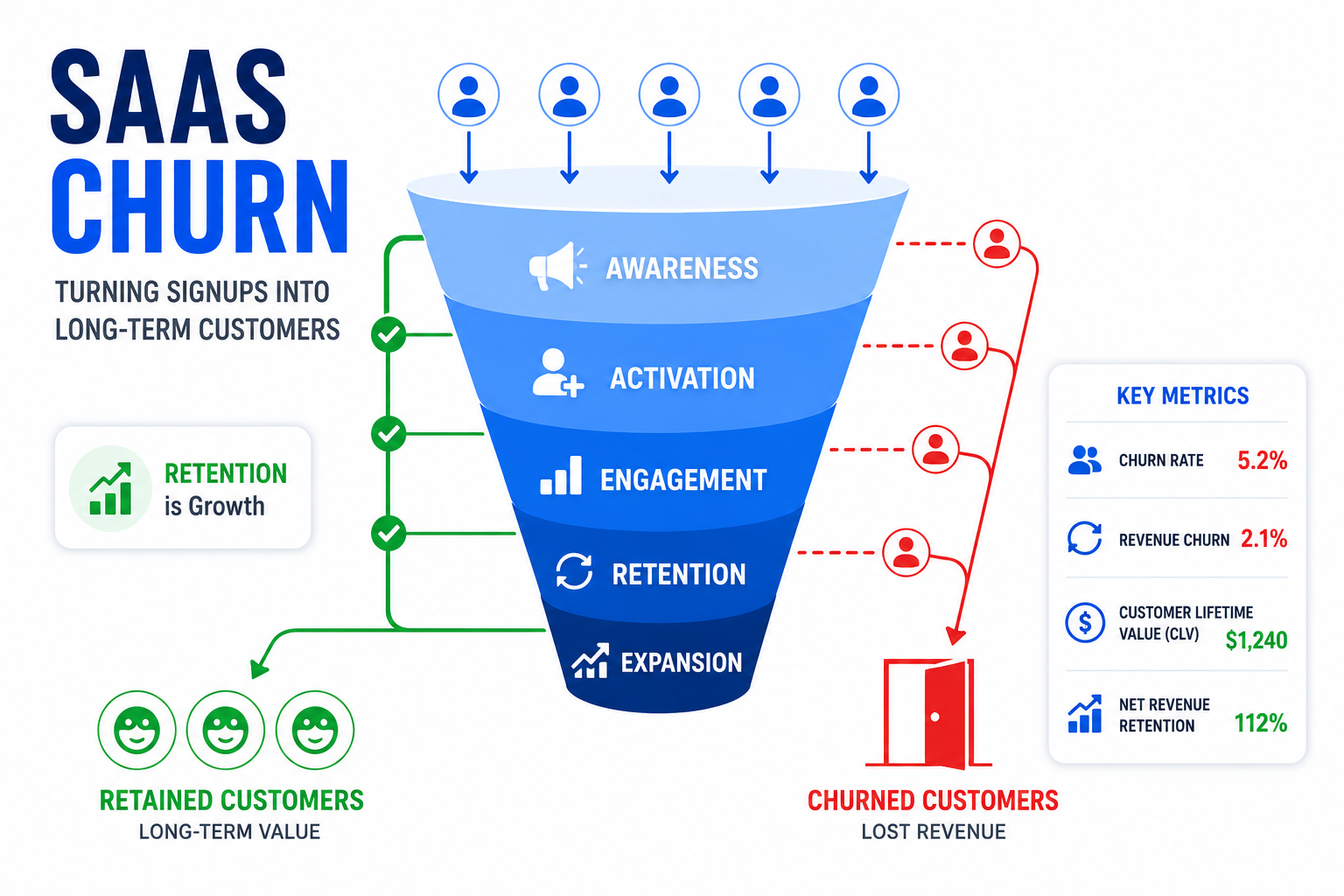
Ignoring Churn
Early customers who leave provide crucial data.
Ask why. Fix problems. The same issues will keep recurring.
Scaling Prematurely
You don't need paid ads, PR agencies, or sales teams yet.
First customers come from hustle: direct outreach, communities, relationships.
Your First Customer Action Plan
- This week: Identify 20 people to reach out to
- This week: Post in 3 relevant communities
- This month: Launch on Product Hunt or similar
- This month: Publish 4 pieces of relevant content
- Ongoing: Talk to every user personally
Your first 10 customers set the foundation. Work for them individually. What you learn enables everything that follows.
Building a SaaS product and need help with development or go-to-market strategy? Contact Duo Dev for product consulting and development services.